
Originally published February 22, 2017. Updated September 8, 2026.
Tension fabric has been a staple of exhibit and experiential design for years, and for good reason.
It is lightweight, versatile, easy to transport, and capable of creating everything from simple graphic walls to illuminated displays, suspended structures, curved forms, and large scale branded environments.
But the real advantage of tension fabric is not any single feature.
It is how well fabric works as part of a complete display system.
When the graphic, frame, sewing, finishing, lighting, packing, and installation are considered together, tension fabric can support highly customized environments while remaining practical to ship, install, update, and reuse.
Here are some of the reasons it continues to be such a valuable material for trade shows, exhibits, retail environments, experiential activations, and branded spaces.
1) Tension Fabric Keeps Structures Lightweight
One of the biggest advantages of tension fabric is weight.
Compared with many rigid graphic materials, fabric can cover a large visual area without adding significant mass to the overall structure.
That can affect far more than freight costs.
A lighter structure can be easier to:
- Handle during installation
- Rig overhead
- Move through a venue
- Pack and unpack
- Dismantle
- Store between events
- Reuse across multiple installations
For large exhibit environments, suspended structures, and temporary branded spaces, reducing unnecessary weight can make the entire project more manageable.
The structural frame still needs to be engineered appropriately, but fabric allows designers to create large visual surfaces without relying on heavy rigid materials.
2) Fabric Packs Efficiently for Shipping and Storage
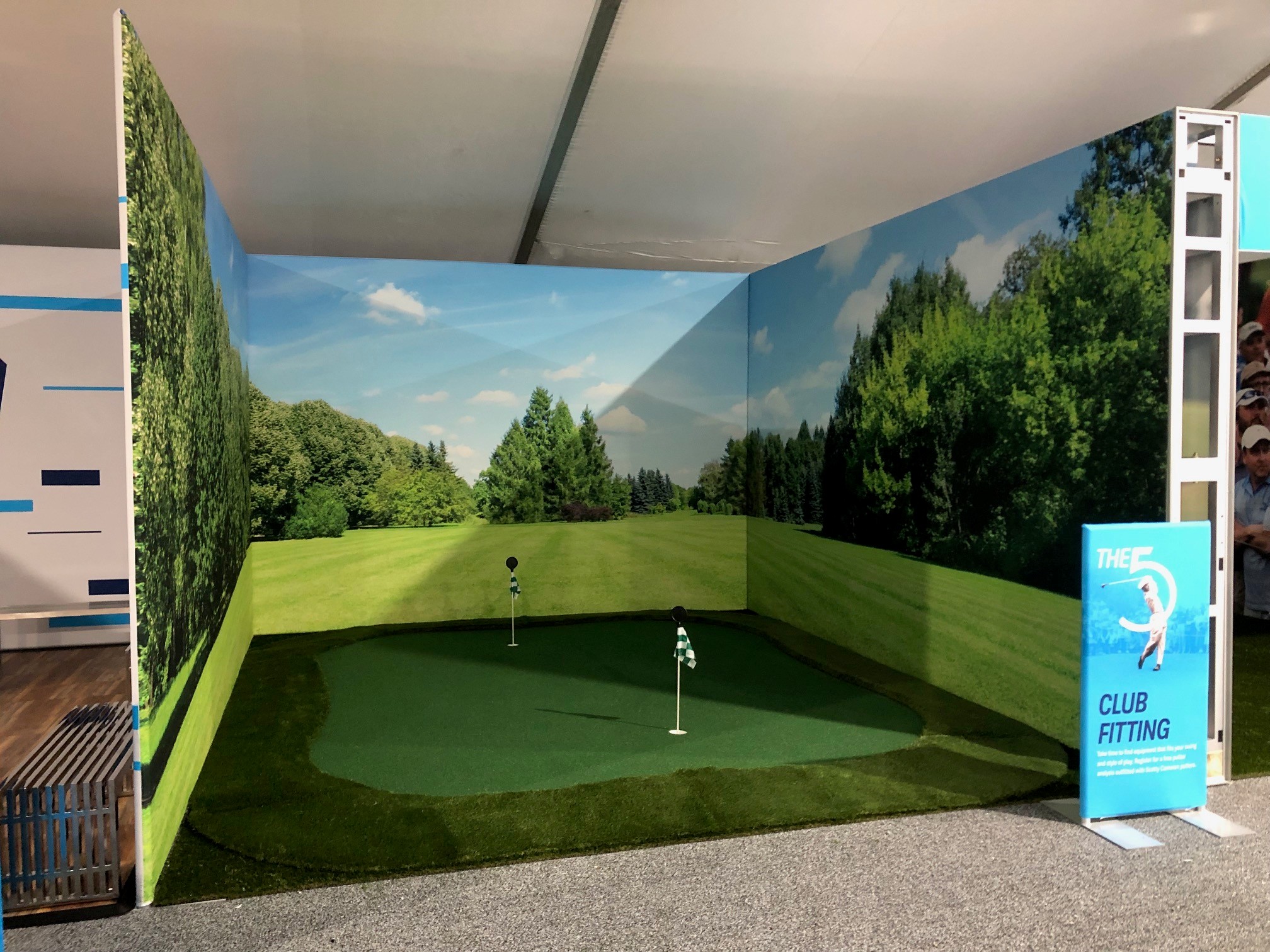
Large graphics do not necessarily need large shipping containers.
One of the practical advantages of fabric is that it can often be folded or rolled into a relatively compact package once it is removed from the frame.
That can simplify:
- Freight
- Crating
- Storage
- Inventory management
- Transportation between events
This is especially important for exhibits and experiential programs that travel frequently.
A large branded environment may occupy a significant footprint once installed, but the graphics themselves can often be packed much more efficiently than rigid panels of comparable size.
3) Fabric Can Create Large, Continuous Graphic Surfaces
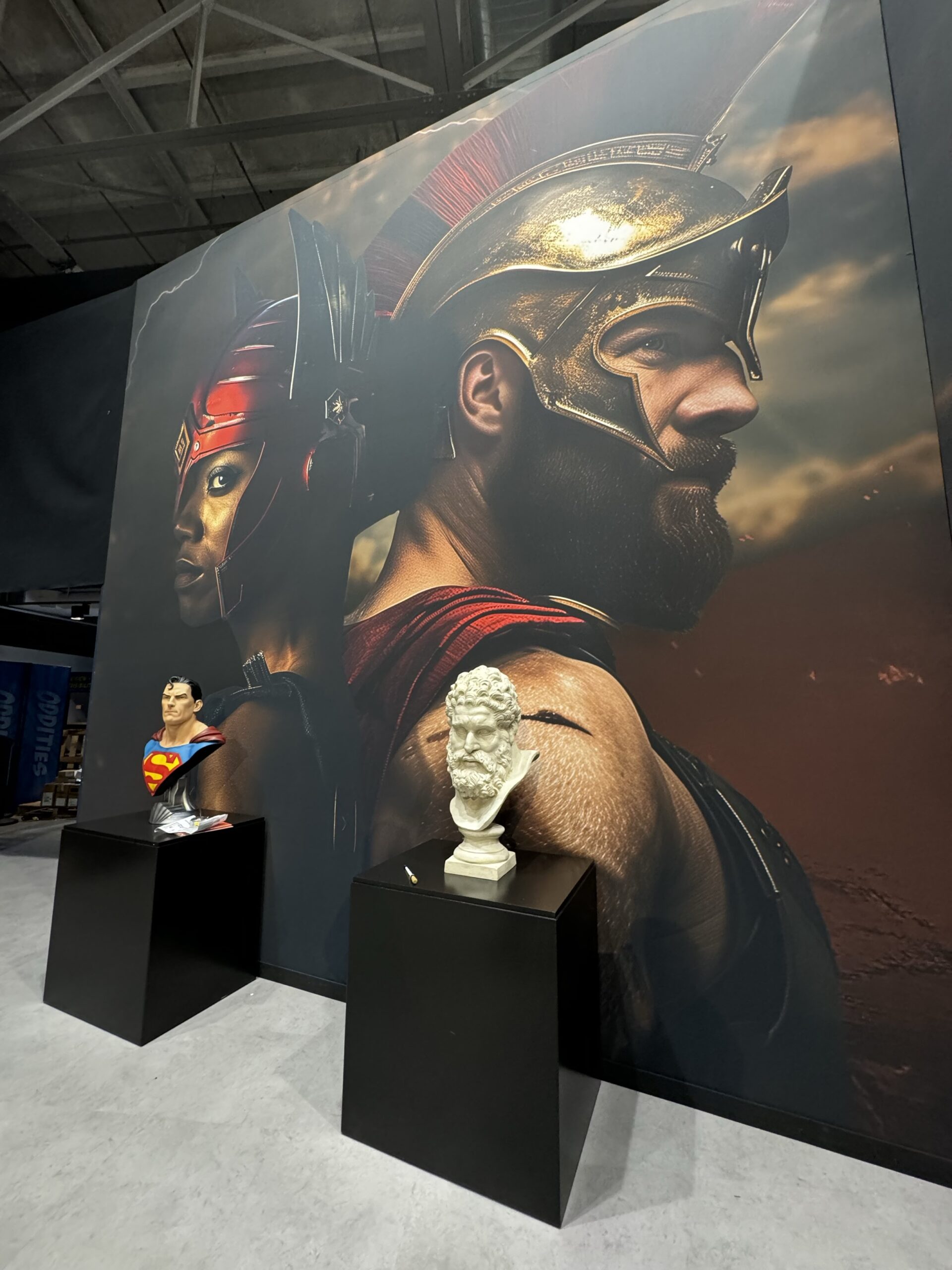
Tension fabric is well suited to large scale graphics because it can create smooth, visually continuous surfaces.
That makes it useful for:
- Exhibit walls
- Backdrops
- Suspended signs
- Light boxes
- Architectural features
- Retail environments
- Branded installations
- Dimensional structures
When properly patterned, sewn, finished, and tensioned, fabric can wrap around structural forms and help create a clean finished appearance.
This is especially valuable when the goal is to create a large visual statement without visible panel breaks or excessive seams.
4) Tension Fabric Works Well With Curved and Dimensional Structures
Fabric is not limited to flat walls.
It can be integrated with curved frames, arches, domes, suspended structures, dimensional forms, and other custom geometries.
That flexibility gives designers greater freedom to move beyond conventional rectangular graphics.
The structure underneath may be built using aluminum extrusion, SnapTube®, bent tubing, fabricated components, or a combination of systems.
The fabric then becomes the finished visual surface.
Because fabric can conform to complex geometry more easily than many rigid materials, it is often an important part of custom structures that rely on curves, movement, or sculptural forms.
5) Fabric Integrates Naturally With Backlighting
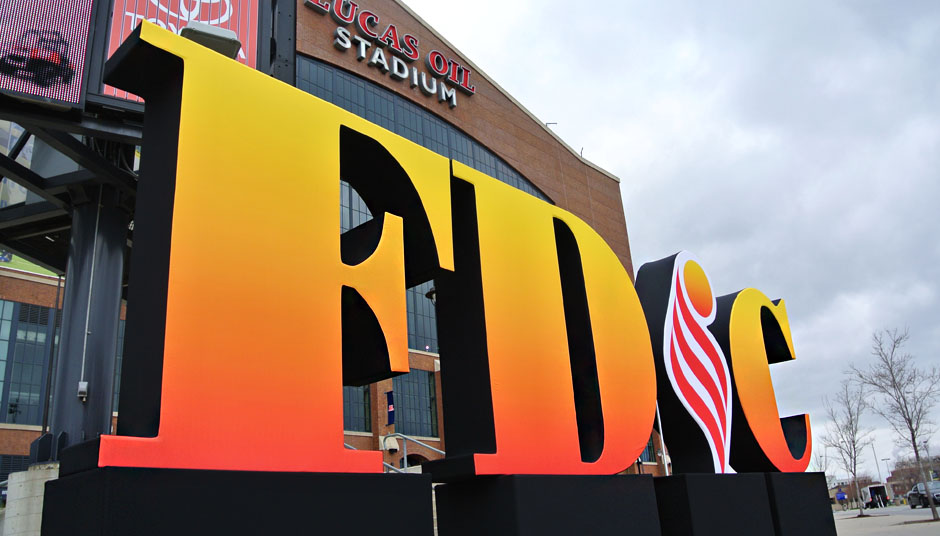
Tension fabric and LED lighting work particularly well together.
Backlit fabric can create:
- Illuminated walls
- Light boxes
- Suspended signs
- Branded architectural features
- Perimeter graphics
- Dimensional displays
The fabric selection, print process, frame depth, lighting layout, and graphic density all influence the final result.
That is why illuminated fabric graphics should be treated as complete systems rather than simply printed graphics placed in front of lights.
When those elements are coordinated correctly, fabric can produce bright, evenly illuminated branded surfaces with strong visual impact.
6) Graphics Can Be Replaced Without Replacing the Structure
For many brands, the structure itself remains useful long after a campaign changes.
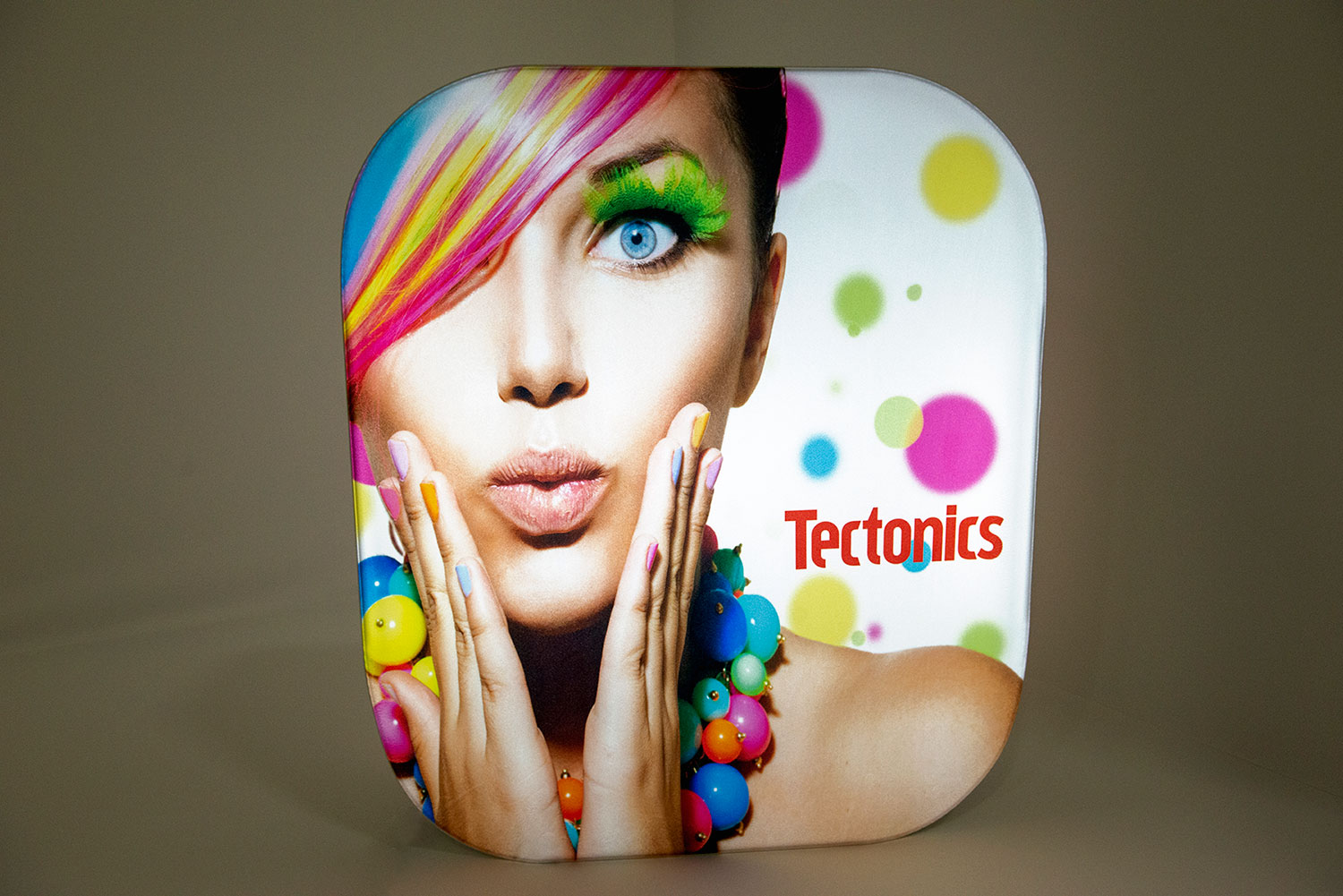
Tension fabric graphics can often be replaced while the underlying frame is reused.
That can be valuable for:
- Seasonal campaigns
- Product launches
- Trade show programs
- Retail promotions
- Rebranding
- Event specific messaging
- Multiple divisions or product lines
Instead of rebuilding an entire display, a company may be able to update only the graphic component.
This makes tension fabric especially useful in modular environments designed for repeated use.
7) Fabric Supports Modular Display Systems
Many exhibit and experiential programs need to adapt from one space to another.
A display may appear as one configuration at a large event and a smaller configuration at the next.
Fabric works well within modular systems because graphics can be paired with reusable structural components.
Depending on the design, frames may be reconfigured, combined, separated, or reused with different graphics.
This can give brands more flexibility across changing footprints while reducing the need to fabricate entirely new environments for every installation.
8) Different Fabrics Create Different Visual and Performance Effects
Not all display fabrics are the same.
Fabric selection depends on the intended application and may be influenced by:
- Opacity
- Stretch
- Weight
- Texture
- Light transmission
- Print characteristics
- Durability
- Finishing requirements
- Flame performance
A backlit graphic may require a different textile than an opaque wall graphic.
A curved structure may benefit from fabric with different stretch characteristics than a flat wall.
A suspended element may require a different combination of weight and structural performance.
Choosing the right fabric is part of the engineering and production process, not simply a finishing decision.

9) Fabric Can Support Required Flame Performance
Trade show, exhibit, retail, and public environments often have specific flame performance requirements.
Certain fabrics are manufactured to meet applicable flame resistance standards, while others may require testing, certification, or treatment depending on the material and application.
That is why fabric specifications should be evaluated early in the project.
The appropriate textile should be selected based on the venue, installation environment, structure, and relevant requirements rather than assuming that every fabric performs the same way.
10) Fabric Can Simplify Installation
When a graphic system is properly designed, fabric can make installation relatively straightforward.
The exact installation method depends on the structural system and finishing approach, but common advantages include:
- Lower component weight
- Fewer large rigid panels
- Compact packing
- Replaceable graphic skins
- Repeatable attachment points
- Easier handling on site
The best results come when the graphic and structure are engineered together.
Fabric patterning, seam placement, finishing, attachment methods, and frame geometry all affect how easily the graphic installs and how well it fits once tensioned.
11) Printing, Sewing, and Fabrication Can Work as One System
One of the biggest advantages of tension fabric comes from integrating the entire production process.
A successful fabric display may require:
- Structural engineering
- Aluminum extrusion
- SnapTube fabrication
- Tube processing
- Large format printing
- Dye sublimation
- Sewing
- Pattern development
- Graphic finishing
- Lighting integration
- Trial assembly
- Packing
- Installation support
When these capabilities are coordinated, the finished graphic can be developed around the actual structure rather than treated as a separate piece of production.
That becomes especially important for curved, dimensional, illuminated, and custom environments.
The structure influences the fabric.
The fabric influences the finishing.
The finishing influences installation.
And all of those decisions affect how the final display performs in the field.
Tension Fabric Is More Than a Printed Graphic
Tension fabric remains popular because it solves both creative and practical challenges.
It can create large visual surfaces without excessive weight.
It can wrap complex forms.
It can integrate with lighting.
It can pack efficiently.
It can be replaced without rebuilding an entire structure.
And it can support modular environments designed for repeated use.
For creative teams, that combination provides flexibility.
For manufacturers and installers, it provides a material that can be engineered into a wide range of structural systems.
The result is a display solution that can work across trade shows, experiential environments, retail spaces, corporate interiors, and other branded applications.
Bring Fabric Into the Design Conversation Early
The earlier fabric, structure, graphics, and installation requirements are considered together, the more options a project team has.
Tectonics combines engineering, structural fabrication, large format printing, dye sublimation, sewing, finishing, lighting integration, and installation support to help turn fabric based concepts into complete display systems.
If you are planning a tension fabric wall, light box, suspended structure, curved display, or custom branded environment, talk with Tectonics about the materials and structural options that best fit the application.