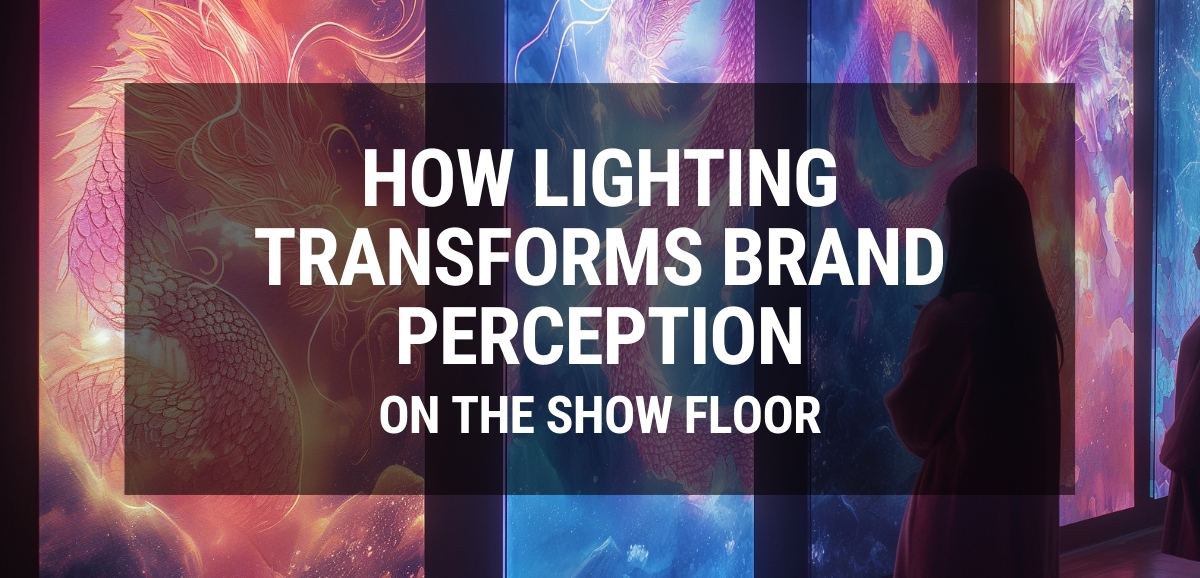
On a crowded tradeshow floor, brands are competing for more than attention. They are competing for perception. How your booth looks, feels, and draws people in shapes how attendees understand your brand before a single conversation begins.
Lighting plays a powerful role in that first impression. It influences mood, clarity, professionalism, and emotional response. When used intentionally, lighting becomes more than a functional necessity. It becomes a strategic design tool.
Lighting Is Often the First Thing People Notice
Before visitors read a headline or engage with staff, their eyes are drawn to light. Brightness, contrast, and glow naturally guide attention in busy environments filled with color, motion, and sound.
Booths that rely solely on ambient hall lighting often fade into the background. Graphics can appear flat, muted, or difficult to read from a distance. In contrast, illuminated elements create immediate visual hierarchy, helping key messages stand out and pulling visitors toward the space.
This is why lighting frequently determines which booths get approached and which get passed by.
Illumination Shapes Emotional Response
Lighting does more than make graphics visible. It sets the tone.
Soft, evenly lit surfaces can feel modern and premium. Bright, high contrast illumination can communicate energy and innovation. Warmer lighting may feel welcoming, while cooler tones often feel technical and forward thinking.
When lighting aligns with brand personality, it reinforces the story you are trying to tell. When it does not, even strong graphics can feel disconnected or underwhelming.
On the show floor, perception is formed quickly. Lighting helps ensure it is the right one.
Backlit Graphics Elevate Visual Quality
Backlit displays dramatically improve how graphics are experienced. Instead of relying on overhead lights that create glare or shadows, illuminated graphics produce consistent brightness across the entire surface.
Fabric light box displays allow color, photography, and typography to appear richer and more dimensional. Text becomes easier to read from farther away. Images gain depth and clarity. The overall presentation feels intentional and polished.
This visual consistency is especially important in large booths or high traffic areas where lighting conditions can change throughout the day.
Lighting Creates Structure and Flow
On larger exhibits, lighting helps organize space.
Illuminated walls, counters, and overhead elements can define zones for demos, meetings, or product displays. Visitors intuitively understand where to go and where to focus. Lighting becomes a wayfinding tool as much as a branding element.
When paired with modular systems, illuminated elements can be repositioned or reconfigured to support different layouts without sacrificing visual impact.
Modern Lighting Systems Support Flexibility
Today’s lighting solutions are designed to adapt. LED systems offer consistent illumination, low energy consumption, and long lifespan. Many light box displays also support dimming or programmable settings, allowing brands to adjust brightness based on environment or time of day.
This flexibility matters for exhibitors who reuse components across multiple shows or environments. Lighting that performs consistently reduces guesswork and elevates brand presentation everywhere it appears.
At Tectonics, light box displays are engineered to combine premium materials, seamless graphics, and integrated lighting that supports both form and function.
Lighting Signals Investment and Intentionality
Well designed lighting sends a message. It tells visitors that a brand is thoughtful, prepared, and invested in how it shows up.
Poor or inconsistent lighting can unintentionally signal the opposite, even if the product or service itself is strong. On the show floor, perception is shaped by details, and lighting is one of the most visible details of all.
Seeing Brands in a Better Light
Lighting has the power to transform how a brand is perceived in seconds. It draws attention, enhances graphics, defines space, and creates emotional connection.
As tradeshows continue to grow more competitive, brands that treat lighting as a core design element gain a clear advantage. Illumination is no longer an accessory. It is a foundational part of modern exhibit design.
Explore how Tectonics designs light box displays that help brands stand out and be remembered on the show floor.
Frequently Asked Questions About Lighting on the Show Floor
Lighting is often the first element attendees notice. It draws attention, improves visibility, and sets the tone for how a brand is perceived. Well designed lighting helps booths stand out in crowded environments and makes graphics easier to read from a distance.
Lighting shapes emotional response and visual clarity. Even lighting can create a premium, professional feel, while dynamic illumination can communicate energy and innovation. Poor lighting can make strong branding appear flat or overlooked, impacting how visitors perceive the brand.
Backlit displays, integrated LED systems, and illuminated architectural elements perform best on the show floor. These solutions create consistent brightness, reduce shadows, and maintain visibility regardless of changing hall lighting conditions.
Backlit displays illuminate graphics evenly from behind, enhancing color vibrancy, contrast, and readability. Fabric light box displays eliminate hot spots and shadows, allowing images and text to appear crisp and consistent across large surfaces.
Yes. Lighting can be used to define zones for demos, meetings, or product displays. Illuminated elements naturally guide visitors through a space, helping create intuitive movement and improving overall booth engagement.
Modern exhibit lighting uses LED technology, which consumes less energy and produces less heat than older lighting systems. LED lighting also has a longer lifespan, making it more efficient for repeated use across multiple shows.
Yes. Many illuminated display systems are modular and designed for reuse. Frames and lighting components can be reconfigured while graphics are updated, allowing brands to maintain consistent lighting quality across different booth sizes and environments.
Light box displays are used across tradeshows, retail spaces, pop ups, experiential activations, and interior branding. Because they generate their own illumination, they perform consistently in both bright and dim environments.
Lighting can be integrated through backlit walls, illuminated counters, hanging signs, or architectural elements. Working with a partner who designs and engineers lighting as part of the structure ensures better performance and easier installation.
You can explore illuminated and backlit solutions here:
👉 https://tectonics.com/what-we-make/light-boxes/