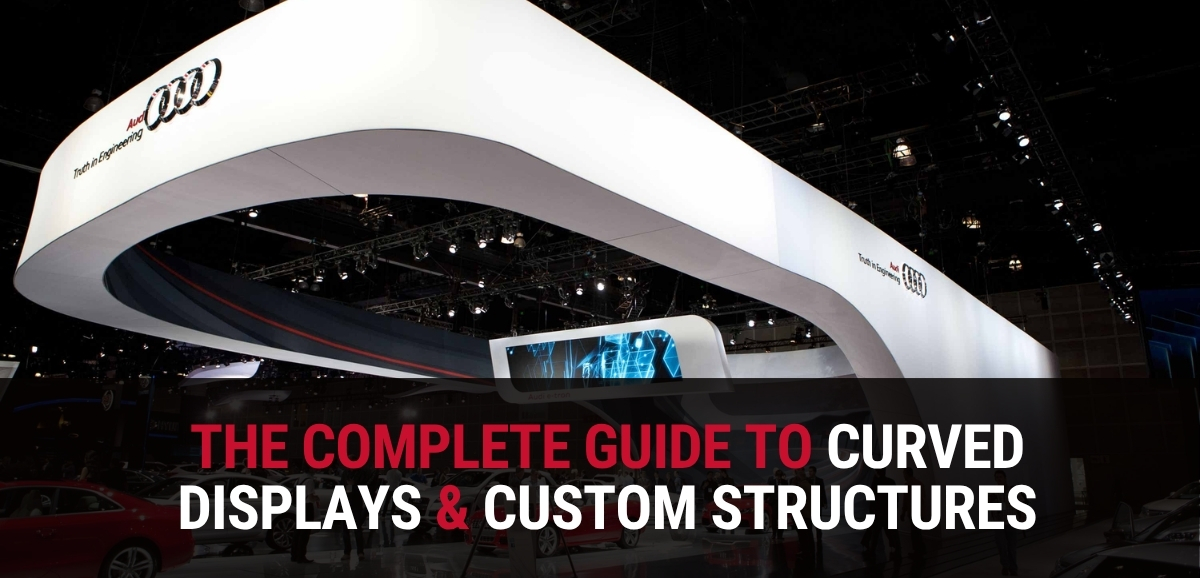
Straight lines have their place. But when a branded environment needs to create movement, define a space, guide visitors, or simply stand apart, curves can completely change the experience.
Curved displays and custom structures give designers greater freedom to move beyond conventional rectangular forms and create environments that feel more dimensional, intentional, and immersive. From sweeping walls and arches to dimensional headers, light boxes, suspended elements, and completely custom structures, curved forms can transform how people see and move through a space.
Advances in fabrication and manufacturing have also made it possible to create increasingly complex shapes without sacrificing the practical considerations that matter for exhibits, events, retail environments, and architectural applications.
This guide explores the possibilities of designing with curved displays and custom structures, including how they’re made, where they can be used, and what to consider when turning an unconventional idea into a manufacturable solution.
Why Design with Curves?
Most built environments naturally contain straight lines, right angles, and rectangular forms. Introducing curves immediately creates visual contrast.
But the benefits go beyond aesthetics.
Curved structures can influence how a space feels and functions. A sweeping wall can guide visitors into an exhibit. A curved header can draw the eye toward a focal point. Rounded corners can create a more open, approachable environment, while organic forms can reinforce a brand’s visual identity.
Curves can also help designers:
- Create more fluid, immersive environments
- Establish natural pathways through a space
- Soften large-scale structures
- Increase visibility from multiple viewing angles
- Create distinctive silhouettes
- Incorporate organic shapes into branded environments
- Break away from traditional booth and display configurations
Rather than designing within the limitations of standard shapes, curved fabrication allows the structure itself to become part of the creative concept.
Types of Curved Displays and Structures
There isn’t one standard definition of a curved display. Curved elements can range from subtle architectural details to large-scale custom structures.
Curved Walls
Curved walls can help define spaces without creating the visual barriers associated with traditional straight partitions.
Depending on the application, they can be used as branded backdrops, perimeter walls, environmental graphics, product displays, or architectural features.
Curved walls are particularly effective when designers want to create a sense of movement or guide visitors naturally through an environment.
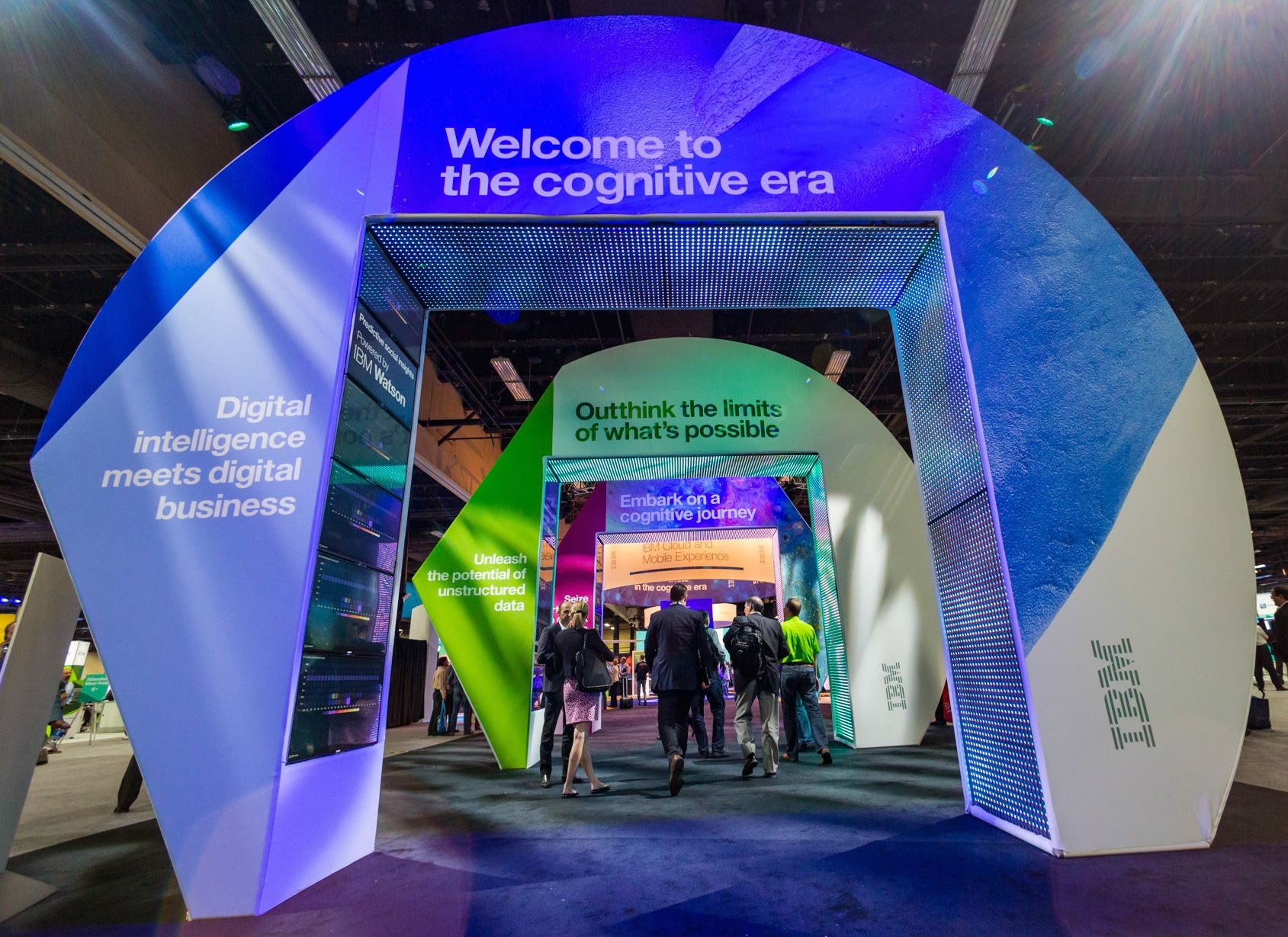
Arches and Entry Features
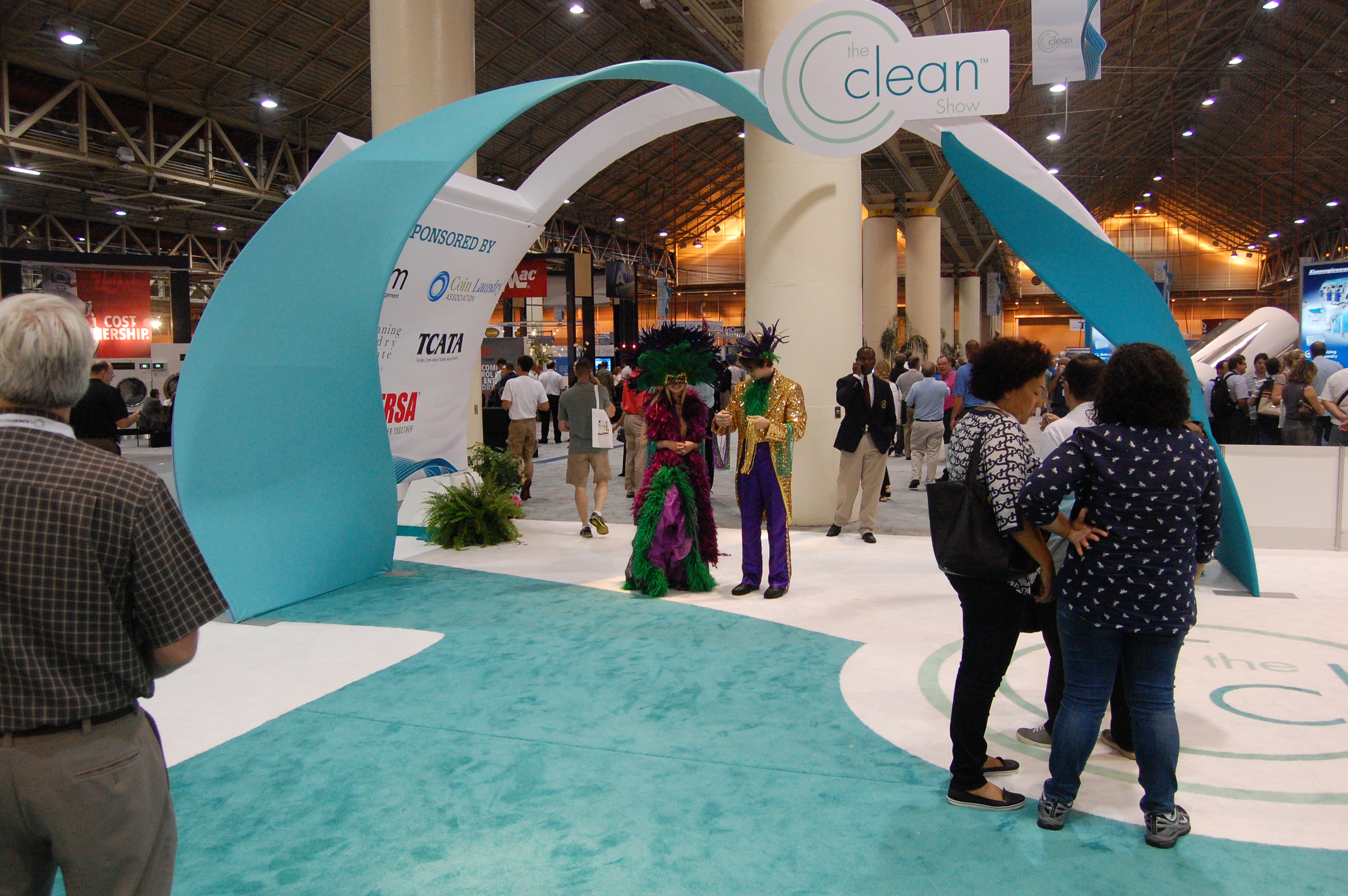
Arches create an immediate visual threshold and can help establish entrances, pathways, or focal points.
They can range from simple curved frames with graphics to highly customized dimensional structures incorporating lighting, printed surfaces, or other fabricated elements.

Curved Headers
Headers provide valuable branding space above eye level while helping define an exhibit or environment from a distance.
Curving the structure creates additional visual interest and can increase visibility from different approaches compared with a traditional flat header.
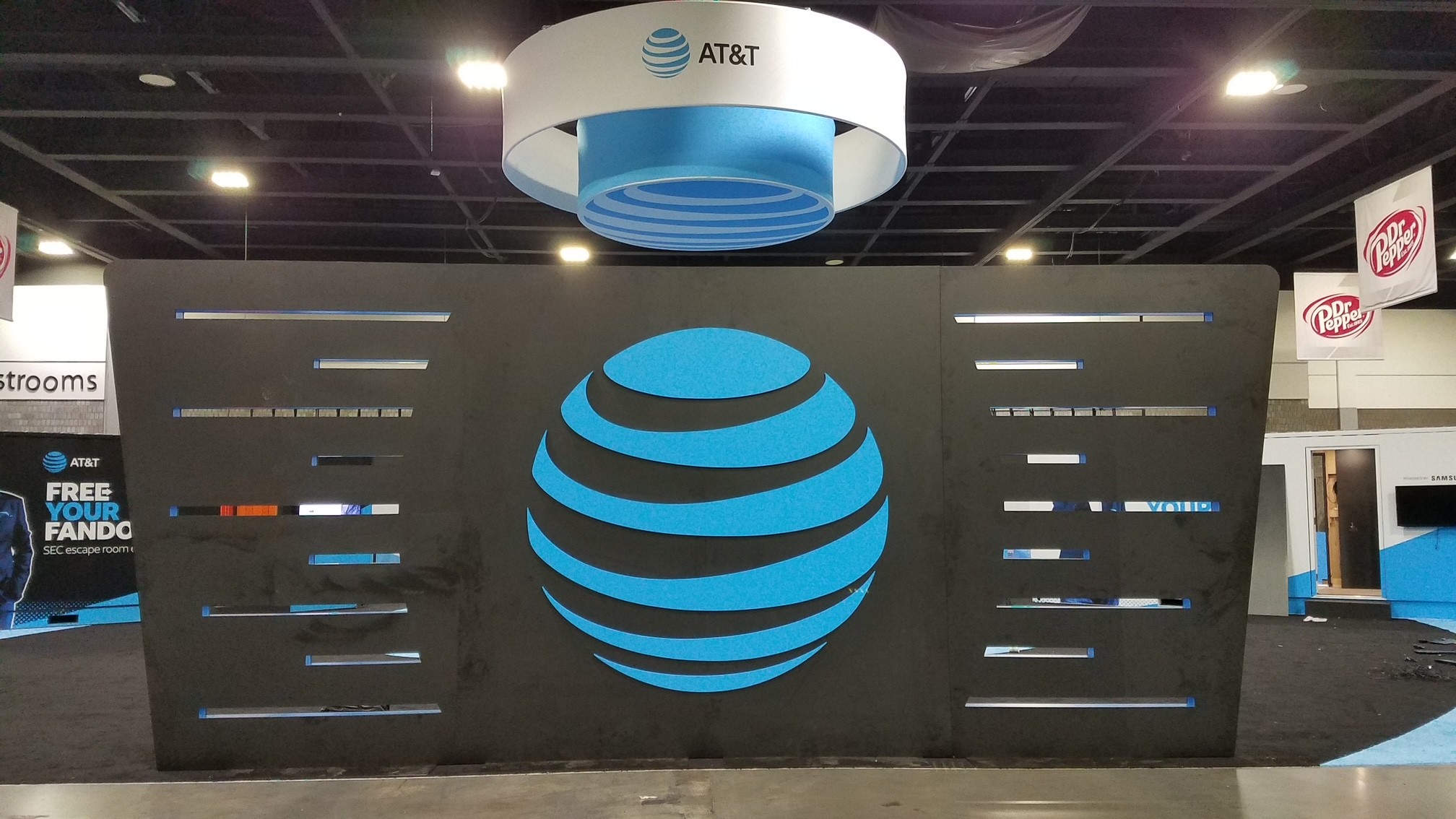
Curved Light Boxes
Lighting can make curved structures even more impactful.
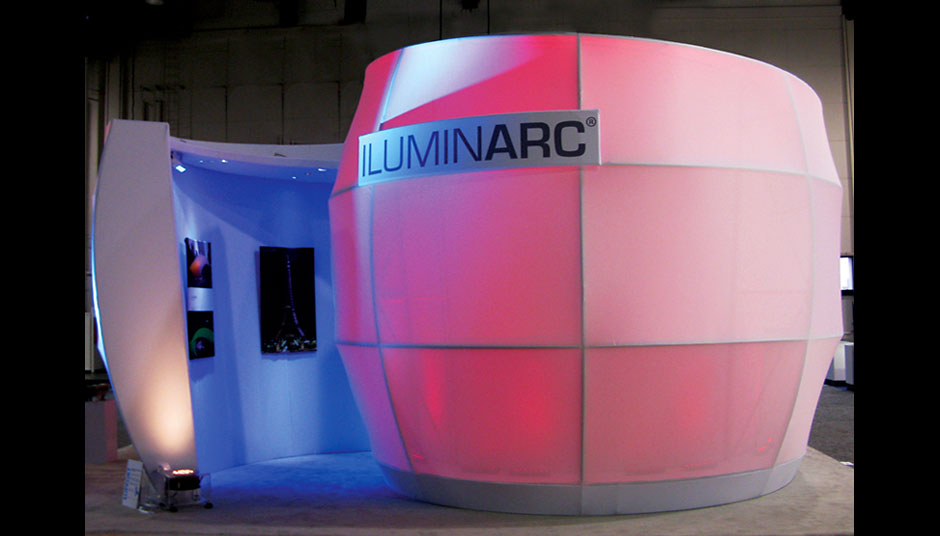
Curved light boxes combine dimensional form with illumination, creating bright architectural elements that can serve as signage, environmental features, or major visual focal points.
Suspended and Overhead Structures
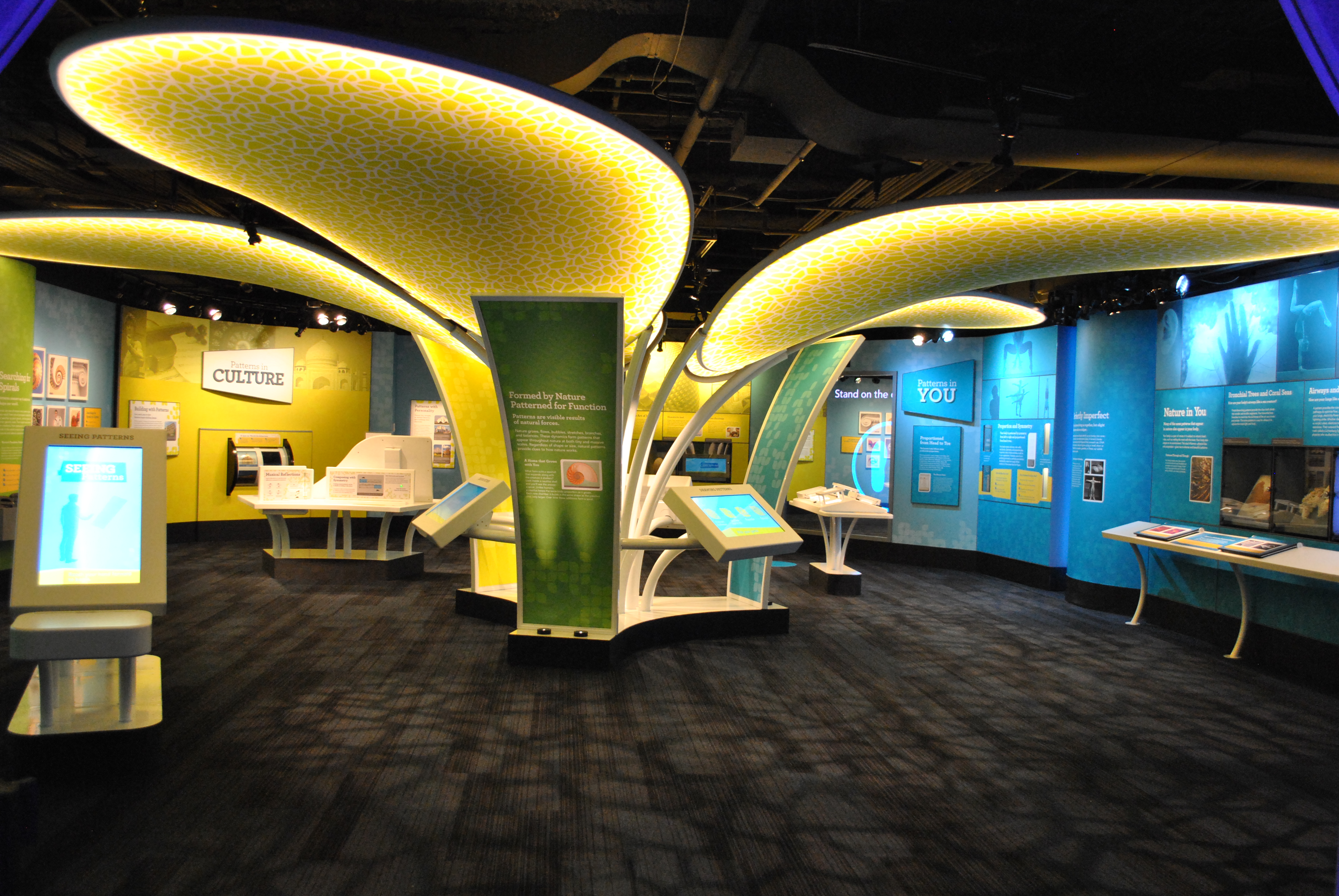
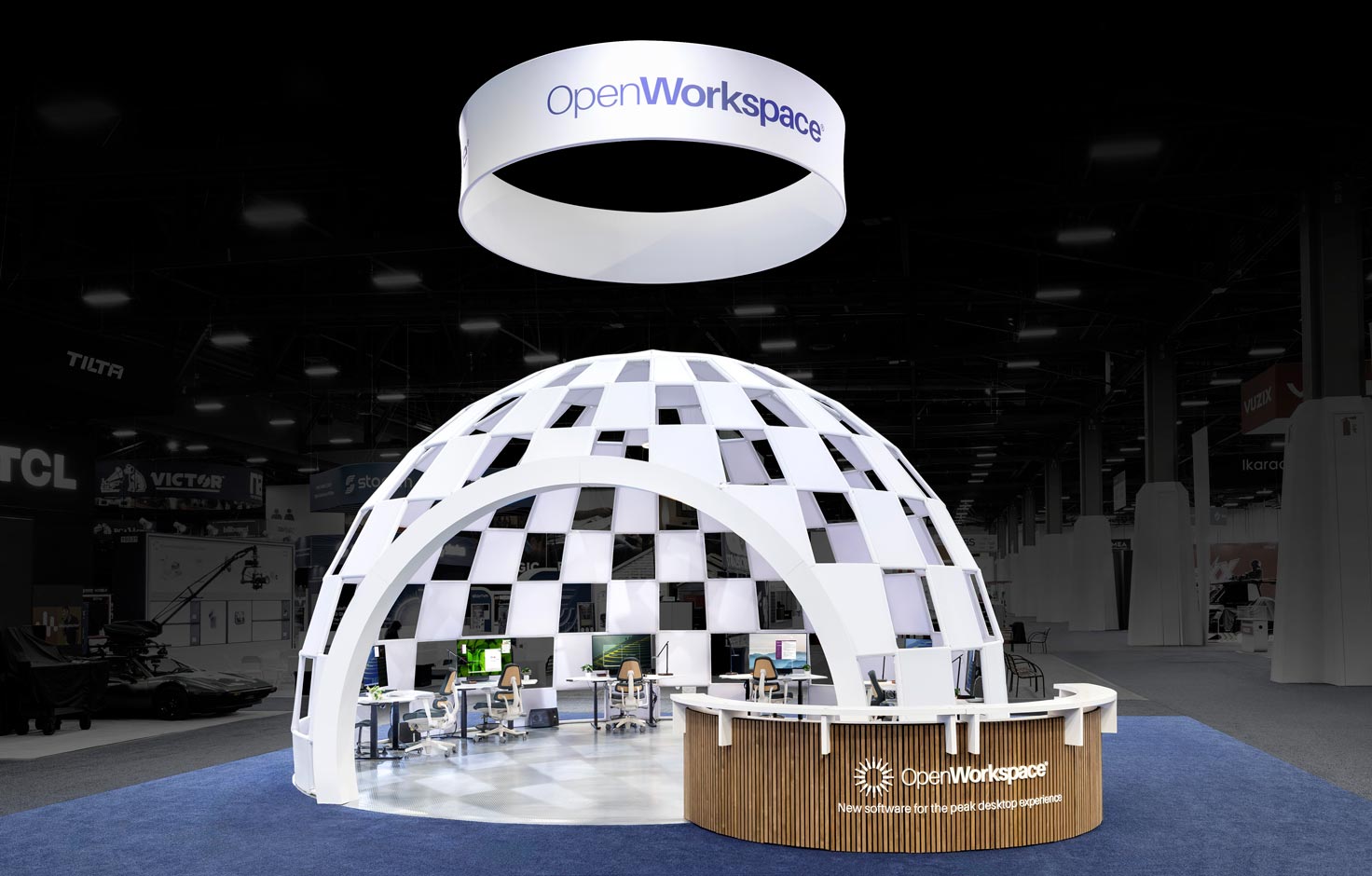
Curves are particularly effective overhead, where rings, sweeping shapes, and custom suspended structures can create recognizable silhouettes visible from across a show floor or large environment.
These structures can help establish a brand’s presence before visitors ever reach the space itself.

Organic and Custom Forms
Some concepts don’t fit neatly into a predefined category.
Custom fabrication allows designers to explore organic shapes, unusual profiles, dimensional forms, and structures created specifically for an individual project.
This is where design and manufacturing collaboration becomes especially important.
Curved Displays vs. Flat Displays
Curved isn’t automatically better than flat. The right structure depends on what the environment needs to accomplish.
Flat structures are extremely effective for large graphic surfaces, straightforward space division, modular configurations, and applications where maximizing usable surface area is important.
Curved structures offer different advantages.
They can create movement, soften transitions, improve sightlines, and make environments feel less rigid. They can also help designers create a more distinctive visual identity when standard rectangular forms don’t support the creative concept.
Many successful environments combine both.
Straight structures can provide practical surfaces and architectural definition, while curved elements introduce movement and visual interest.
The goal isn’t to use curves simply because they’re possible. It’s to determine where shape can improve the experience.
How Curved Structures Influence Spatial Design
The shape of a structure affects how people interact with the space around it.
A large flat wall can create a clear boundary. A curved wall can create that same separation while naturally directing people around or into the space.
This makes curves particularly useful for environments where traffic flow matters.
Designers can use curved structures to:
- Encourage visitors toward an entrance
- Create pathways without traditional barriers
- Wrap environments around gathering areas
- Define semi-private spaces
- Guide attention toward displays or messaging
- Create natural transitions between different areas
For exhibits and experiential environments, these subtle spatial cues can help create a more intuitive visitor experience.
Designing with Curved Aluminum Frames
Aluminum is particularly well suited to curved display construction because it combines strength with relatively low weight.
Extrusion can be formed into curved profiles that become the framework for walls, headers, light boxes, architectural features, and other custom structures.
The ability to bend extrusion expands what designers can create while maintaining the structural advantages of an engineered aluminum frame.
It can also allow curved and straight components to work together within the same structural system, opening the door to more complex configurations.
Why In-House Extrusion Bending Matters
Creating curved structures often requires specialized manufacturing capabilities.
When extrusion bending is integrated into the manufacturing process, designers and fabricators can work more closely together to determine how a concept should be built.
For Tectonics, in-house extrusion bending expands our ability to produce curved frames, arches, walls, headers, light boxes, and custom structures as part of a coordinated manufacturing process.
That provides greater flexibility when developing custom shapes and helps bring more of the project’s structural fabrication together under one roof.
More importantly, it expands what’s possible.
Instead of approaching a concept by asking which standard structures can approximate the design, teams can explore how the structure itself can be manufactured to support the creative vision.
Turning Creative Concepts into Manufacturable Structures
One of the biggest challenges with custom structures is translating a creative concept into something that can actually be fabricated, transported, installed, and used successfully.
A rendering may look incredible while presenting very different challenges once engineering begins.
Successful custom fabrication considers factors such as:
- Structural integrity
- Material selection
- Weight
- Connection points
- Graphic integration
- Lighting
- Shipping and packaging
- Installation requirements
- Repeatability
- Intended lifespan and use
That’s why collaboration between designers, engineers, and manufacturers is especially valuable early in the process.
The earlier manufacturing considerations are incorporated, the more opportunity there is to preserve the original creative intent while developing a practical solution.
Beyond the Structure: Integrating Graphics and Lighting
The frame is only one part of a finished environment.
Curved structures can incorporate printed graphics, rigid materials, fabric, acrylic, dimensional elements, and lighting to create a fully integrated feature.
Graphics can follow the contours of a curved wall or structure, turning the entire surface into a branded canvas.
Lighting can emphasize the geometry of a structure, illuminate graphic surfaces, or transform a curved form into a focal point of its own.
When structural fabrication, graphics, and finishing capabilities are coordinated from the beginning, these elements can be designed to work together rather than being treated as separate components.
 Where Curved Displays Can Be Used
Curved structures can be adapted for a wide range of branded environments.
Trade Shows and Exhibits
Curved walls, headers, arches, hanging structures, and light boxes can help exhibits stand apart on crowded show floors while creating more intentional visitor pathways.
Experiential Marketing and Events
Organic forms and custom structures give experiential designers greater freedom to create environments around a campaign or concept rather than relying on conventional display shapes.
Retail Environments
Curved structures can be used for branded installations, product displays, architectural features, signage, and temporary promotional environments.
Corporate and Interior Environments
Custom walls, illuminated features, and architectural structures can help integrate branding into offices, lobbies, showrooms, and other interior spaces.
Custom Branded Installations
Some projects simply don’t belong in a category. When the objective is to create something unique, custom fabrication provides the flexibility to develop a solution around the idea itself.
What to Consider When Planning a Custom Curved Structure
If you’re considering incorporating curved elements into a project, it helps to involve your manufacturing partner early.
Start with the creative objective rather than the manufacturing method.
What should the structure accomplish? Where will it be viewed? How should people move around it? Does it need to incorporate graphics or lighting? Will it travel to multiple locations?
From there, engineering and manufacturing teams can help determine the appropriate materials, fabrication methods, structural requirements, and finishing techniques.
The strongest custom solutions typically come from collaboration between creative ambition and manufacturing expertise.
Expanding What’s Possible with Custom Fabrication
Curved displays aren’t simply an alternative to straight walls.
They’re another design tool.
They allow brands and designers to think differently about shape, movement, architecture, and how people experience a physical environment.
And as manufacturing capabilities continue to expand, the possibilities extend well beyond basic curves. Combining extrusion bending, tube processing, printing, graphics, lighting, sewing, engineering, and custom fabrication makes it possible to create structures that would be difficult to achieve through standard display systems alone.
At Tectonics, we work with clients to turn creative concepts into practical, manufacturable solutions, from individual curved components to fully custom branded environments.
Bring Your Next Idea to Life
Have a concept that doesn’t fit inside a standard catalog?
Tectonics combines engineering, extrusion and tube processing, printing, graphics, fabrication, finishing, and installation support to help bring custom displays and structures from concept to completion.