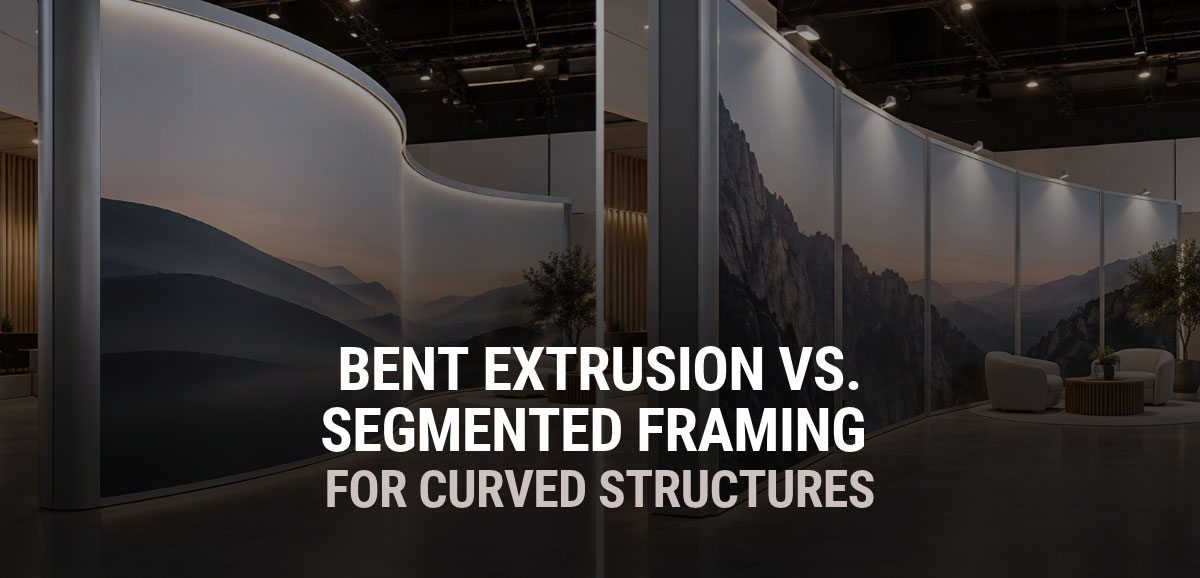
A curved display can begin with a simple line in a rendering. Turning that line into a finished structure requires a more detailed decision: should the framework follow a continuous curve, or should straight sections come together to approximate it?
Bent aluminum extrusion and segmented framing offer different ways to approach curved walls, headers, arches, and other custom structures. The right choice depends on the intended appearance, graphic system, structural requirements, and how the display needs to travel and install.
The distinction is not simply custom versus modular. A bent extrusion structure can still be modular, and a segmented frame can still require substantial custom engineering.
For a broader overview of the available structural approaches, explore Curved Structure Systems and Fabrication Methods.
What Is the Difference Between Bent Extrusion and Segmented Framing?
The main difference is where the change in direction happens.
Bent Extrusion Creates Curvature Within the Profile
With bent extrusion, the aluminum profile itself is formed into a curve. Rather than remaining straight between connection points, the member follows the intended radius along its length.
Achieving that shape requires a bending process suited to the profile, material, and final geometry. Alloy, material condition, and the way the profile responds after forming all influence the result.
A curved member might form the upper edge of a wall, the perimeter of a header, or part of an arch. The important characteristic is that the member itself provides the curved geometry.
Segmented Framing Creates Direction Changes Between Sections
For this comparison, segmented framing means straight members or flat frame sections joined at angles to create an overall curved arrangement. Imagine several flat display panels arranged around a gathering area. Each panel remains flat, but their combined layout follows an arc.
The result is a series of facets rather than a continuously curved frame. Using shorter sections and smaller changes in angle can bring that arrangement closer to the desired arc, but it remains an approximation.
That is not necessarily a drawback. A faceted appearance may support the design, particularly when individual panels serve as separate product, graphic, or demonstration areas.
A Continuous Curve Does Not Have to Be One Continuous Piece
One of the most useful distinctions is between curvature and modularity. Curvature describes the shape of a component. Modularity describes how components divide and connect.
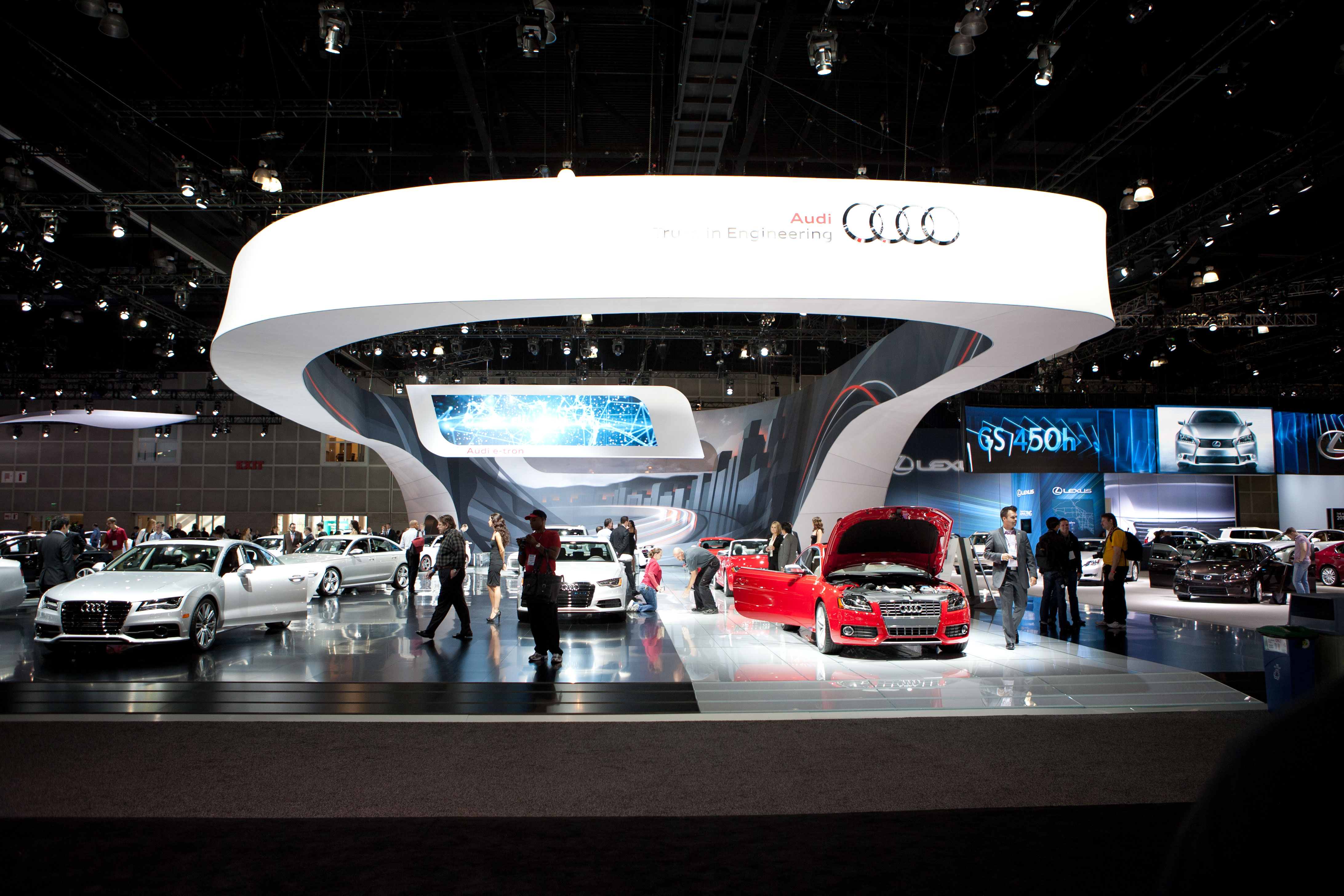
A large circular header could be manufactured as several bent sections that reconnect at the installation site. Each section follows the intended radius, while the connections allow the structure to break down for transportation.
That is different from building the same outline with straight sections joined at angles. Both structures contain multiple pieces, but they create different geometry.
Tectonics’ approach to large curved structures includes engineering smaller components that can be connected, checked, disassembled, shipped, and reassembled. Choosing a curved frame does not automatically mean committing to an oversized, permanently assembled structure.
Start With the Finished Appearance
Before choosing a fabrication method, determine what the viewer actually needs to see. Does the structure need a smooth, uninterrupted silhouette? Is the frame exposed? Will visitors approach closely, or primarily see it from across a space? Are angular transitions acceptable, or would they conflict with the design?
These questions help establish whether the curve itself is essential or whether an overall curved arrangement will accomplish the same objective.
For example, consider an entrance arch with an exposed aluminum perimeter. If the intended appearance is a smooth sweep, evaluate bent extrusion early.
Now consider a product display arranged around a central demonstration area. If each flat section presents a different product, the facets may be useful rather than something to conceal.
Neither example makes one construction method universally better. They establish different visual requirements that should guide the engineering.
Can the Selected Extrusion Achieve the Required Curve?
A smooth radius in a rendering does not establish that a particular extrusion can be bent to match it.
Profile geometry, wall thickness, alloy, material condition, bend direction, and tooling all affect feasibility. Functional details such as channels and connection features also need consideration because the profile must remain usable after forming. Hydro’s design guidance specifically emphasizes evaluating each profile individually rather than assuming the same bending options apply to every section.
For display applications, that review should include more than the outside silhouette. A frame might also need to retain a graphic, accept a connector, or align with an adjacent straight section.
The practical question is therefore:
Can this profile achieve the intended shape while still performing its required functions?
When the answer is uncertain, review the profile and geometry before finalizing the design. Possible responses include changing the radius, selecting a different profile, revising the connection strategy, or considering another structural approach.
The Graphic Surface Needs Its Own Plan
A smooth graphic and a smooth frame are related, but they are not interchangeable.
In particular, adding fabric to a segmented frame does not automatically turn its facets into a continuous curved surface. The attachment locations and supporting geometry still influence the finished shape.
Even systems designed with curved frames can require additional support to achieve the intended textile fit. Manufacturer guidance for curved fabric frames shows that support requirements can vary with the radius and whether the textile sits on the inside or outside of the curve.
The practical implication for a segmented design is to evaluate the finished surface separately. Will the graphic follow each flat section? Will a continuous skin bridge between supports? Does the design need a curved perimeter or another supporting layer?
Do not leave those questions for the graphics team to resolve after the frame is complete.
Rigid panels introduce a similar decision. Separate flat panels can reinforce a faceted design, while a smooth surface requires a material and support strategy that can achieve the intended curvature.
For either approach, review the proposed surface in section as well as in the overall rendering. That makes it easier to understand what is actually holding the graphic in shape.
Connections Matter in Both Approaches
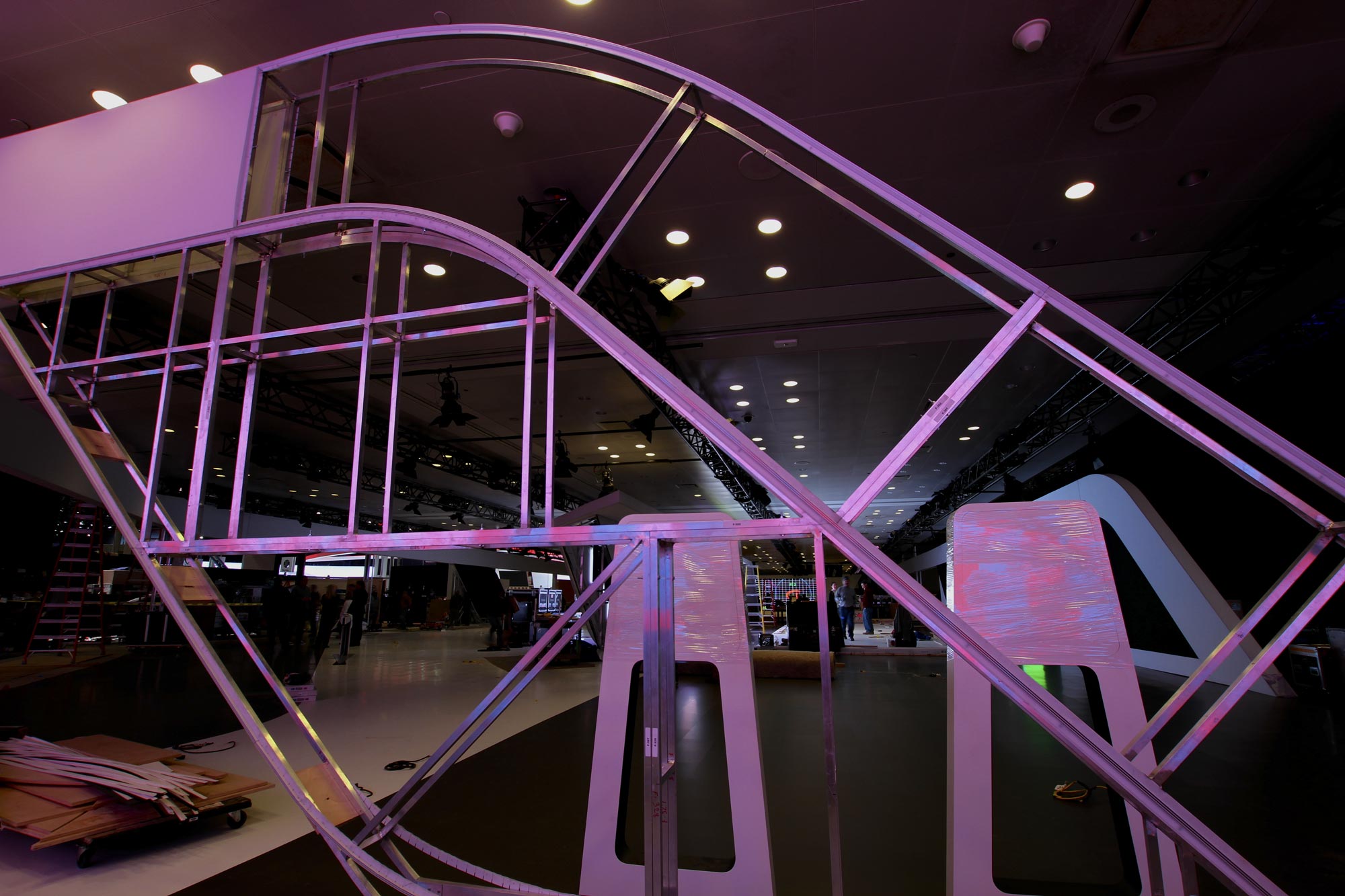
Neither bending nor segmentation removes the need for structural engineering.
The complete assembly still needs to account for its dimensions, supports, attached materials, connections, and intended use. Overhead features, freestanding walls, and architectural elements also present different requirements. Tectonics identifies structural integrity, weight, connection points, graphics, and installation as interconnected considerations in custom curved fabrication.
For a segmented frame, examine how each joint establishes and maintains the required angle. For a structure assembled from bent sections, examine how the joints maintain the radius and alignment between modules.
In both cases, ask whether the connections are accessible during assembly and whether they can be reliably positioned during future installations.
A frame should not be selected on the assumption that bent means stronger or that more sections mean easier assembly. Those conclusions require evaluation of the actual design.
Compare Packing and Installation, Not Just Component Shape
Straight components may offer convenient packing options, but that is only one part of the comparison. For a segmented proposal, review how many separate parts and connections the installation crew must manage. For a bent proposal, review the size and shape of each curved module and how it will fit within the intended packaging.
A practical comparison should answer four questions:
- What are the largest shipping dimensions?
- How are finished surfaces and connection points protected?
- How many field connections are required?
- How will installers establish the correct alignment?
Those questions may reveal that a curved structure needs smaller bent modules. They may also reveal that a heavily segmented design creates more field work than the project can comfortably accommodate.
The objective is not to minimize part count at any cost. It is to find a manageable balance between shipping size, component protection, and installation work.
Reuse and Reconfiguration Are Different Goals
A structure can be reusable without being freely reconfigurable. A bent header designed around a particular radius may be suitable for repeated installation with new graphics. That does not mean its curved members can simply become a different radius at the next event.
Similarly, straight sections do not automatically create unlimited layout flexibility. Custom angles, fixed connectors, and graphic dimensions may restrict how those sections can be rearranged.
Tectonics’ extrusion system includes a range of profiles, locks, and accessories intended to support different display configurations, but the usefulness of any configuration still depends on the components selected for it.
Define the expected future use before choosing the construction method. Will the display return in the same shape with different messaging? Does it need to fit several booth footprints? Should individual sections work independently?
Those are different design briefs. Making the distinction early helps the team develop connections, graphics, and packaging around a realistic reuse plan.
Which Approach Costs Less?
There is no reliable answer without comparing the actual designs. Bent extrusion requires a suitable forming process, and tooling requirements vary. Some roll bending tooling can serve multiple radii, while other bending methods require more dedicated tooling. Production quantity and profile geometry also influence the process selected.
For a segmented alternative, include the work needed to cut, connect, align, and finish the separate sections. A proposal that removes a bending operation may introduce additional joint fabrication or assembly work instead.
Compare the complete project scope rather than the price of one manufacturing step. Ask each proposal to account for engineering, fabrication, graphics, finishing, packaging, and installation.
For a traveling display, also consider what the design asks of the team at each subsequent setup.
The same principle applies to scheduling. Avoid assuming that straight components are always faster to deliver or that bent components necessarily create a longer production schedule. The relevant question is which complete approach best fits the project’s requirements and available production resources.
When Combining Both Approaches Makes Sense
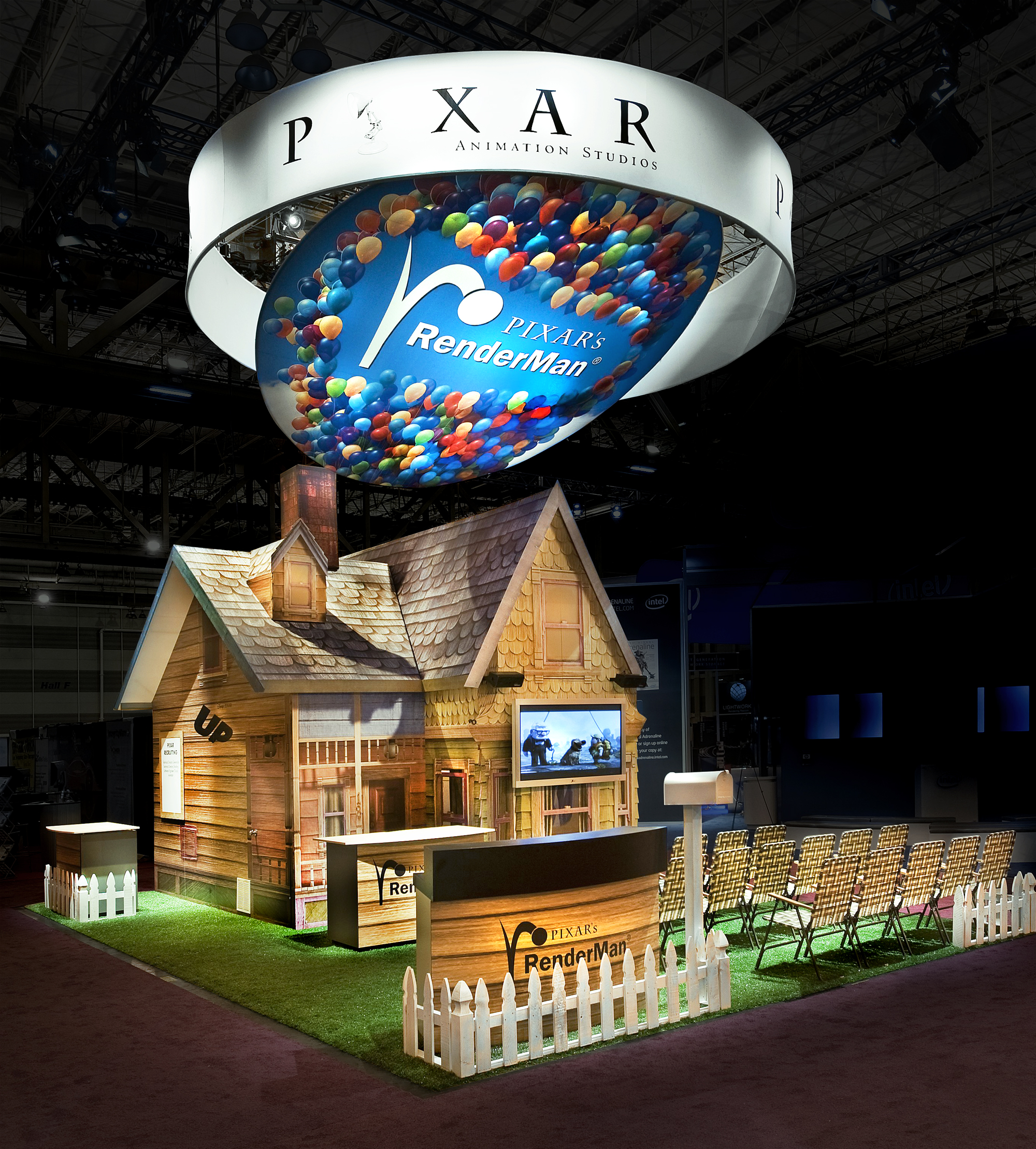
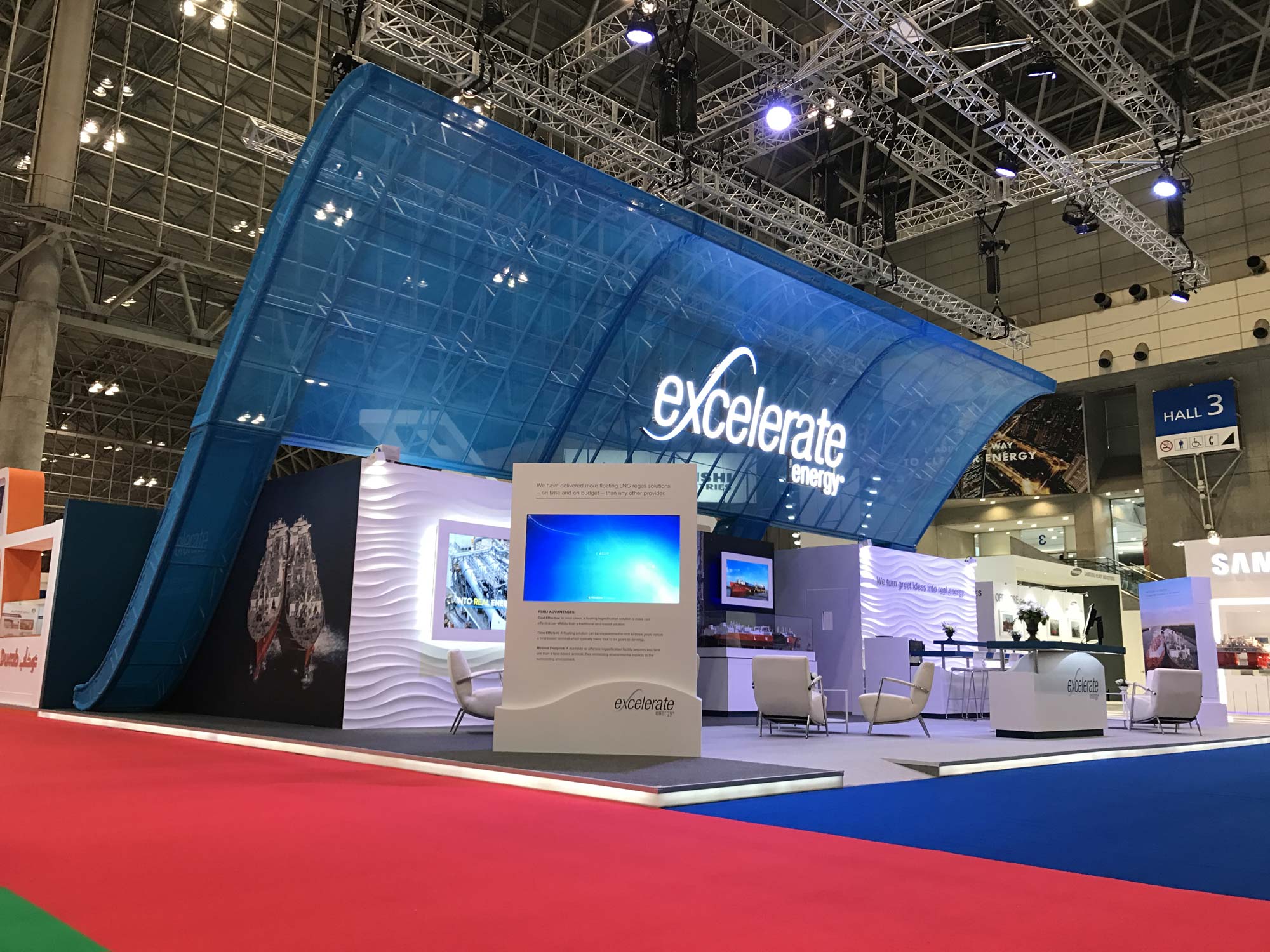
The decision does not always have to apply to the entire structure. A custom wall could use bent extrusion along its visible upper and lower edges, with straight members providing internal support. A large display could combine flat graphic sections with curved end features. A header could use bent perimeter modules and straight internal framing.
These are potential design approaches, not interchangeable construction details. Their suitability depends on the engineering and the finished appearance. Tectonics’ curved fabrication capabilities include combining extrusion, tubing, fabricated components, graphics, and finishing methods rather than treating every project as a single system.
The useful question is:
Where does the structure need a true curve, and where can straight components serve the design?
That can be a more productive starting point than choosing one fabrication method before examining the whole project.
Three Design Scenarios to Discuss With Your Manufacturer
The following examples illustrate how the decision can change with the application.
A Header With a Clearly Visible Circular Outline
Start by evaluating bent perimeter sections. The design priority is the smooth silhouette, while module size and connections can be developed around shipping and installation.
The key review points are profile feasibility, alignment between curved sections, graphic attachment, and the complete support system.
A Display With Several Distinct Product Bays
Consider whether flat sections arranged around an arc would support the experience. If each bay has its own graphic or product presentation, the segmented geometry may give those areas useful definition.
The key review points are the angle between sections, sightlines, connections, and whether the intended faceted appearance works from the main viewing positions.
A Large Graphic Wall That Must Travel Repeatedly
Evaluate the surface and transportation requirements together rather than choosing the frame first. The result might be bent modules, a segmented framework with additional curved support, or a combination of curved perimeter members and straight internal components.
The key question is how to preserve the intended graphic shape without creating impractical shipping dimensions or unnecessary field assembly.
Choose the Method Around the Design
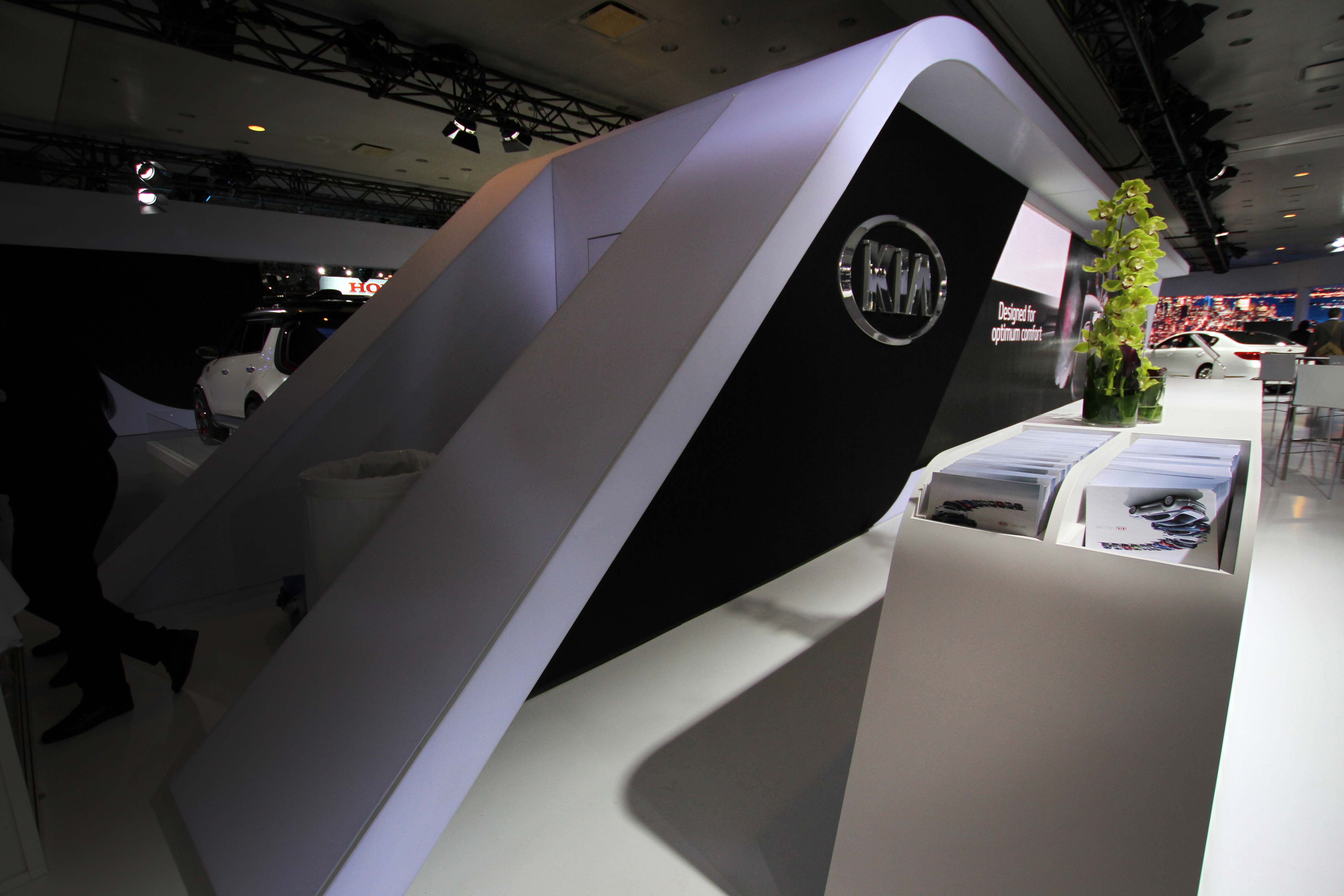
Bent extrusion creates curvature within the aluminum member. Segmented framing creates an overall curved arrangement through changes in direction between straight sections. The right choice begins with the finished appearance, then works through profile feasibility, graphics, connections, packing, installation, and future use.
Early collaboration leaves room to evaluate those choices before the design becomes difficult to change. The Aluminum Extruders Council likewise recommends discussing bending requirements with an experienced fabricator during the design stage.
Tectonics brings engineering, extrusion, tube processing, fabrication, printing, sewing, finishing, and installation support into that conversation to help determine the appropriate approach for each project.
Planning a curved wall, arch, header, or custom display? Talk with Tectonics about where bent extrusion, segmented framing, or a combination can best support your design.