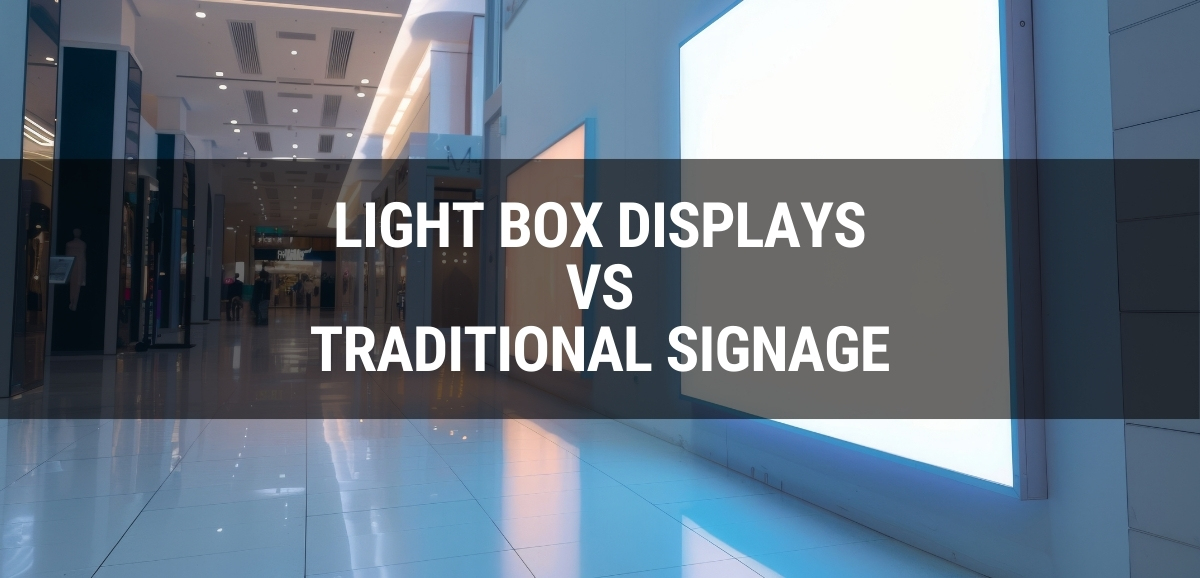
When it comes to visual communication, not all signage performs the same. In environments where attention is limited and competition is high, the difference between being seen and being overlooked often comes down to light.
Light box displays and traditional signage each serve a purpose, but they deliver very different results. Understanding how they compare can help brands choose the right solution for their space, message, and long term goals.
What Is Traditional Signage
Traditional signage typically includes rigid panels, vinyl graphics, printed boards, or non illuminated displays mounted to walls, structures, or frames. These solutions are often cost effective upfront and work well in static environments where lighting conditions are consistent.
However, traditional signage relies entirely on ambient light to remain visible. In crowded or dim spaces, graphics can fade into the background or lose clarity as lighting conditions change throughout the day.
What Are Light Box Displays
Light box displays use integrated LED lighting to evenly illuminate graphics from behind. Modern systems pair lightweight aluminum extrusion frames with SEG fabric graphics to create seamless, edge to edge visuals with no exposed hardware.
Because light box displays generate their own illumination, they remain clear, vibrant, and readable in a wide range of environments. They are commonly used in tradeshows, retail spaces, pop ups, interior branding, and experiential installations where visibility and impact matter.
Visibility and Impact
The most immediate difference between light box displays and traditional signage is visibility.
Traditional signage can struggle to stand out in busy environments. Competing visuals, uneven lighting, and shadows often reduce readability and impact.
Light box displays naturally draw attention. Backlit graphics create contrast and depth that make messaging easier to see from a distance. In high traffic environments, illuminated displays consistently outperform non illuminated signage in attracting attention.
Graphic Quality and Flexibility
Traditional signage often relies on rigid substrates that limit size, finish, and transport options. Updating graphics may require replacing entire panels, increasing time and cost.
Light box displays use fabric graphics that are lightweight, high resolution, and easy to replace. Dye sublimation printing allows for vibrant color and photorealistic detail, while fabric graphics can be shipped compactly and installed without tools. This makes light box displays ideal for brands that update messaging frequently.
Installation and Reusability
Traditional signage is often designed for a single use or fixed installation. Reconfiguring or relocating signage can be difficult and costly.
Light box displays are built as modular systems. Lightweight frames, plug and play lighting, and tool free assembly make them easy to install, transport, and reuse across multiple environments. Frames can be reconfigured while graphics are refreshed, extending the life of the system.
Energy Efficiency and Sustainability
Older signage solutions and fluorescent light boxes consume more energy and generate more heat. They also contribute to waste when panels are discarded after use.
Modern light box displays use energy efficient LED lighting and reusable frames. Fabric graphics can be replaced without rebuilding the structure, reducing material waste. Over time, this makes light box displays a more sustainable and cost effective solution.
Choosing the Right Solution
Traditional signage still has a place for certain applications, especially where lighting conditions are controlled and messaging is static.
Light box displays are the better choice when visibility, flexibility, and long term value are priorities. For brands exhibiting at tradeshows, building experiential environments, or creating high impact retail displays, illuminated signage delivers consistent performance across changing conditions.
Lighting the Way Forward
As environments become more visually competitive, brands are rethinking how signage supports their message. Light box displays offer a modern alternative to traditional signage, combining illumination, flexibility, and design freedom in one system.
Explore how Tectonics designs and manufactures light box displays that elevate visibility and performance across any environment.