Light has always been one of the most powerful tools in visual communication. It guides attention, sets mood, and brings graphics to life in ways traditional signage simply cannot. Over the years, light box displays have evolved from bulky illuminated panels into sleek, energy efficient systems that play a central role in modern branded environments.
Today, light box displays are no longer just signage. They are architectural elements, experiential features, and focal points across tradeshows, retail spaces, and permanent installations.

Early Light Box Displays: Functional but Limited
Early light box displays were designed with function in mind, not flexibility or aesthetics. Fluorescent bulbs housed in heavy frames illuminated rigid panels or acrylic faces. While they served their purpose, these systems came with clear drawbacks.
They were heavy, difficult to transport, slow to install, and limited in graphic quality. Uneven lighting, visible hot spots, and restricted sizes made it challenging to create large scale, seamless visuals. Updates often required replacing entire panels, making refreshes costly and time consuming.
For many years, illuminated displays were treated as add ons rather than integral design elements.
The Shift to LED Technology
The introduction of LED lighting marked a turning point in the evolution of light box displays. LEDs offered brighter, more consistent illumination while consuming significantly less energy. They also produced less heat, which expanded material options and improved longevity.
As LED technology advanced, designers gained greater control over brightness, color temperature, and light distribution. This opened the door to thinner profiles, lighter frames, and more uniform backlighting across larger surfaces.
LEDs laid the foundation for the modern light box display systems we see today.
Fabric Graphics Transform the Category
One of the most significant advancements in light box displays came with the adoption of fabric graphics. Silicone edge graphics paired with aluminum extrusion frames allowed for seamless, edge to edge visuals that dramatically elevated graphic quality.
Dye sublimation printing enabled vibrant color, crisp detail, and photorealistic imagery at large scale. Fabric also made graphics easier to ship, install, and replace, turning light boxes into reusable systems rather than single use structures.
This shift transformed light box displays from rigid signage into flexible, modular design tools.
Light Boxes as Architectural Elements
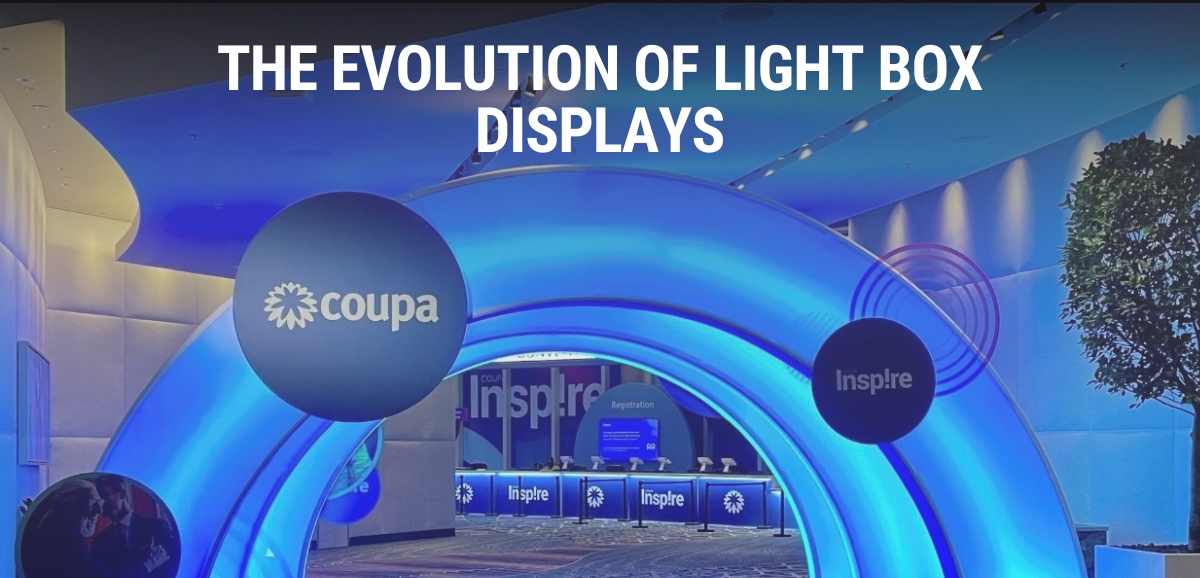
Modern light box displays are no longer confined to walls. They are integrated into environments as architectural features that shape space and guide movement.
Today’s systems can be single sided or double sided, free standing or suspended, and scaled to fill entire walls or form dimensional structures. Seamless graphics, slim profiles, and integrated lighting allow light boxes to function as backdrops, partitions, or immersive brand moments.
At Tectonics, light box displays are engineered to balance visual impact with structural performance, making them suitable for everything from tradeshow booths to experiential and retail environments.
Sustainability and Efficiency Drive Modern Design
As sustainability becomes a priority across industries, light box displays continue to evolve in smarter ways. LED lighting reduces energy consumption, while reusable frames and replaceable fabric graphics minimize waste.
Lightweight aluminum extrusion systems lower shipping costs and carbon impact, and long life components extend the usable lifespan of each display. Rather than rebuilding, brands can refresh graphics and reconfigure layouts to support new campaigns.
Efficiency is no longer just operational. It is part of the design philosophy.

The Future of Light Box Displays
Looking ahead, light box displays will continue to merge technology, design, and flexibility. Expect to see larger seamless formats, deeper integration with architectural elements, and lighting systems that respond dynamically to environment and content.
What remains constant is the role of light as a storytelling tool. In crowded visual environments, illumination continues to be one of the most effective ways to attract attention and create memorable brand experiences.
Illuminating What Comes Next
From bulky fluorescent boxes to sleek, fabric based illuminated systems, light box displays have come a long way. Their evolution reflects a broader shift in how brands think about space, storytelling, and visual impact.
Explore how Tectonics designs and manufactures modern light box displays that combine engineering precision with creative flexibility for environments of every scale.

Frequently Asked Questions About Light Box Displays
Modern light box displays use LED lighting systems that provide consistent illumination, low energy consumption, and long lifespan. Many systems offer dimmable and programmable lighting options, allowing brands to control brightness and visual impact based on the environment.
Yes. Today’s light box displays are designed with lightweight aluminum frames, modular components, and plug and play wiring. This makes installation faster and more efficient, while reducing shipping weight and setup time compared to traditional illuminated signage.
Light box displays can be customized in size, profile, and configuration. Options include single or double sided displays, wall mounted, freestanding, or hanging installations, as well as curved or custom shaped frames. Graphics and lighting can also be tailored to fit specific brand needs.
Light box displays support sustainability through reusable frames, replaceable fabric graphics, and energy efficient LED lighting. Instead of rebuilding structures, brands can refresh graphics or reconfigure layouts, reducing material waste and long term environmental impact.
Illuminated graphics naturally draw the eye and improve readability in busy environments. Light box displays create contrast, depth, and clarity that help brands stand out, especially in crowded spaces like trade shows, retail floors, and experiential activations.
You can explore Tectonics light box solutions, features, and applications here:
👉 https://tectonics.com/what-we-make/light-boxes/
A light box display is an illuminated structure that uses LED lighting to evenly backlight graphics. Modern light box displays typically feature fabric graphics paired with lightweight aluminum frames, creating bright, seamless visuals that stand out in retail, tradeshow, experiential, and architectural environments.
Early light box displays relied on fluorescent lighting and rigid panels, which were heavy and difficult to update. Today’s light box displays use LED technology, fabric graphics, and modular extrusion frames, making them lighter, brighter, more energy efficient, and easier to reconfigure or refresh.
Most modern light box displays use SEG fabric graphics. These graphics feature a silicone edge that fits into an aluminum extrusion frame, creating a smooth, edge to edge appearance with no visible hardware. Fabric graphics also ship compactly and can be easily replaced when messaging changes.
Yes. Light box displays are widely used for retail signage, window displays, pop ups, events, interior branding, wayfinding, and high impact photo opportunities. Their modular construction allows them to adapt to both temporary and permanent environments.