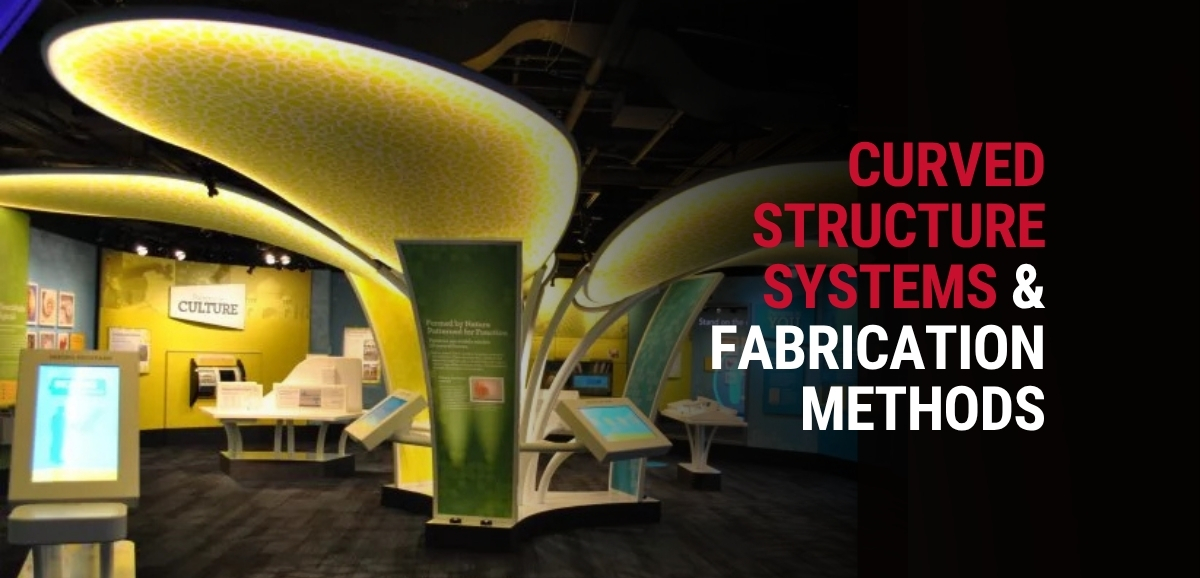
Curved structures can completely change the character of a branded environment.
They can create movement, soften transitions, guide traffic, increase visibility, and give designers the freedom to move beyond traditional straight walls and rectangular forms.
But creating a curve isn’t as simple as choosing a radius and bending a piece of material.
The right fabrication method depends on the structure’s shape, scale, application, finish, graphic requirements, and how it ultimately needs to ship and install. A sweeping fabric wall may require a very different structural system than a curved light box, dimensional header, architectural arch, or organic custom feature.
Understanding the different ways curved structures can be manufactured can help designers choose the right approach for both the creative vision and the practical demands of the project.
What Is a Curved Structure System?
A curved structure system is the underlying framework used to create an arched, rounded, circular, sweeping, or organic form.
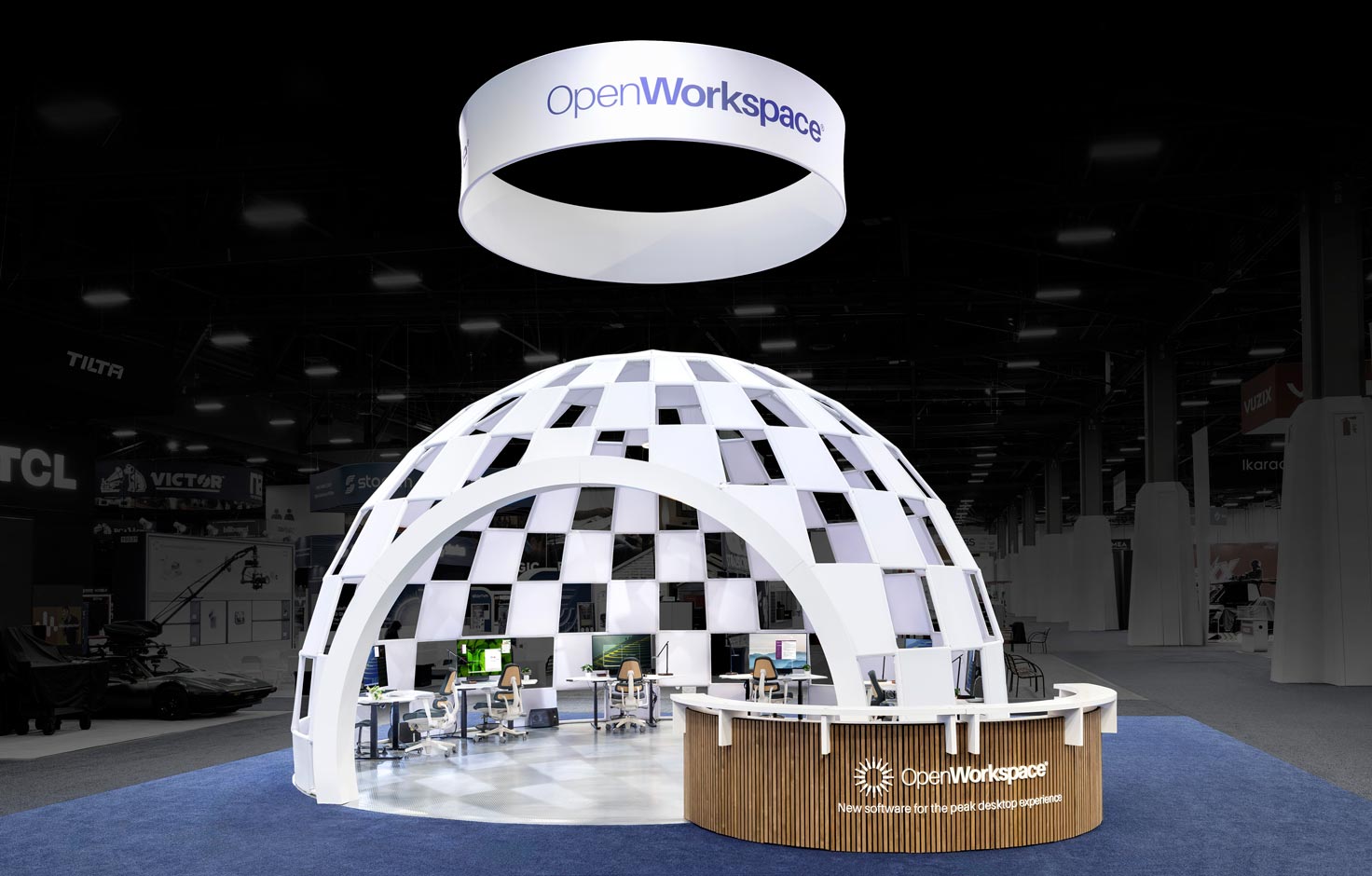
Depending on the application, that framework may be visible as part of the finished design or concealed beneath graphics, panels, lighting, or other finishing materials.
Curved structures can be used to create:
- Walls and backdrops
- Arches and entryways
- Headers
- Light boxes
- Rings and circular features
- Suspended structures
- Dimensional ceiling features
- Counters and kiosks
- Branded architectural elements
- Organic and freeform structures
The final appearance may be simple, but the engineering behind it often requires careful coordination between design, materials, fabrication, graphics, and installation.
Choosing the Right Fabrication Method
There isn’t one best way to manufacture a curved display.
Instead, the fabrication method should be selected around what the finished structure needs to accomplish.
Several factors can influence that decision.
Shape and Radius
A broad, sweeping curve creates different manufacturing requirements than a tight radius or complex organic shape.
The geometry of the design helps determine which materials and fabrication processes are appropriate.
Structural Requirements
Size, weight, orientation, and intended use all affect how a structure needs to be engineered.
A freestanding curved wall has different structural demands than an overhead feature or large dimensional arch.
Surface and Finish
What will cover the structure?
Fabric graphics, rigid panels, acrylic, printed materials, dimensional graphics, and lighting can each affect how the underlying frame needs to be designed.
Shipping and Installation
A custom structure still needs to get where it’s going.
Large curved forms may need to break into smaller sections for shipping and then reconnect efficiently on site. Connection points, component sizes, packaging, and assembly methods therefore become part of the engineering process.
Reuse
For exhibits and other temporary branded environments, a structure may need to travel to multiple events.
Designing around repeated assembly, dismantling, packing, and transportation can help extend the useful life of the finished system.
Curved SnapTube Structures
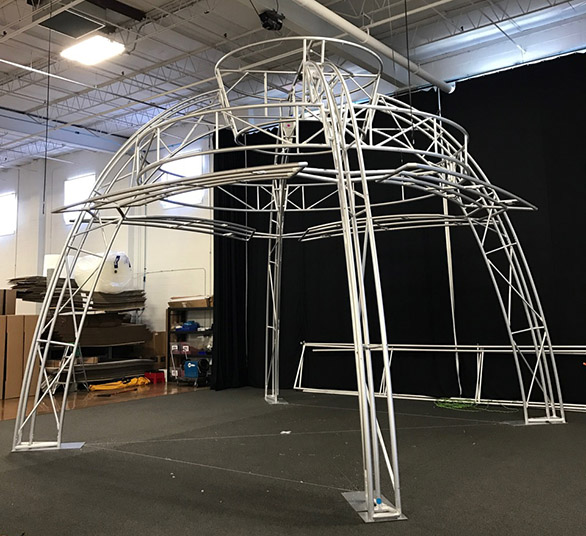
SnapTube is one way Tectonics creates lightweight dimensional and curved structures.
The aluminum tube system can be formed into custom shapes and combined with fabric graphics to create walls, arches, hanging signs, dimensional forms, and other branded structures.
Because the framework is lightweight and designed for efficient assembly, SnapTube can be particularly useful for applications that need to balance custom geometry with portability.
Curved SnapTube structures can also be engineered in sections, allowing larger forms to break down for transportation and be reconstructed at the destination.
For trade shows and events, where shipping weight and installation time matter, those practical considerations can be just as important as the finished appearance.
Curved Aluminum Extrusion
Aluminum extrusion provides another approach to curved structural fabrication.
Extrusion can be bent into controlled profiles and radii, allowing designers to introduce curves into structures that would traditionally rely heavily on straight frame components.
Applications can include:
- Curved walls
- Arches
- Headers
- Light boxes
- Perimeter structures
- Architectural features
- Custom frames
The ability to combine straight and curved extrusion within the same project also gives designers greater freedom to create transitions between traditional geometric forms and more organic shapes.
For example, a straight wall might transition into a rounded corner, or a rectangular structure could incorporate a sweeping curved header.
Rather than treating curves as separate decorative components, they can become part of the structural design itself.
Custom Fabricated Components
Sometimes an off the shelf structural system isn’t enough.
Highly customized projects may require specially fabricated brackets, connectors, supports, transition pieces, or other components engineered specifically for the structure.
These details may barely be visible in the finished installation, but they can make a significant difference in how successfully the structure assembles and performs.
Custom components can help solve challenges involving:
- Unusual connection angles
- Complex intersections
- Transitions between materials
- Modular construction
- Concealed connections
- Structural support
- Installation requirements
This is where engineering and fabrication become especially interconnected.
The goal is to find a manufacturing solution that supports the design without allowing the mechanics of the structure to distract from it.
Integrating Fabric Graphics with Curved Frames
Curved frameworks often serve as the foundation for large graphic surfaces.
Fabric is particularly useful for many curved applications because it can follow dimensional forms while creating a smooth visual surface.
Depending on the structure, graphics may stretch over the frame, wrap around tubing, or attach through an engineered graphic system.
The framework and graphics need to be developed together so that artwork aligns correctly and maintains the intended appearance once installed.
Curves also create different considerations for graphic design itself. Artwork that looks one way on a flat proof may be viewed from multiple angles once wrapped around a dimensional structure.
That makes coordination between structural design, printing, sewing, and fabrication especially important.
Adding Rigid Materials and Acrylic
Not every curved structure uses fabric.
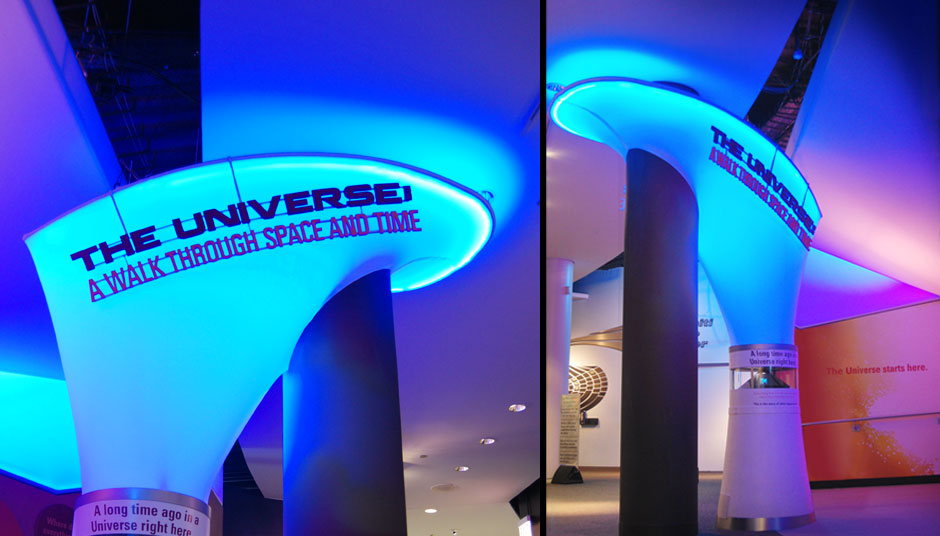
Rigid materials and acrylic can be incorporated into custom structures to create architectural surfaces, signage, dimensional features, and illuminated applications.
Acrylic is especially useful when lighting is part of the design because it can serve as a diffuser or finished visual surface.
Depending on the project, rigid components may be combined with curved aluminum frames, fabricated structures, lighting systems, and printed graphics to create a finished element that incorporates several manufacturing disciplines.
Curved Light Boxes and Illuminated Structures
Adding illumination introduces another layer of complexity to curved fabrication.
The structure needs to support not only the desired shape but also lighting components, electrical requirements, diffusers, graphics, and access for assembly or service.
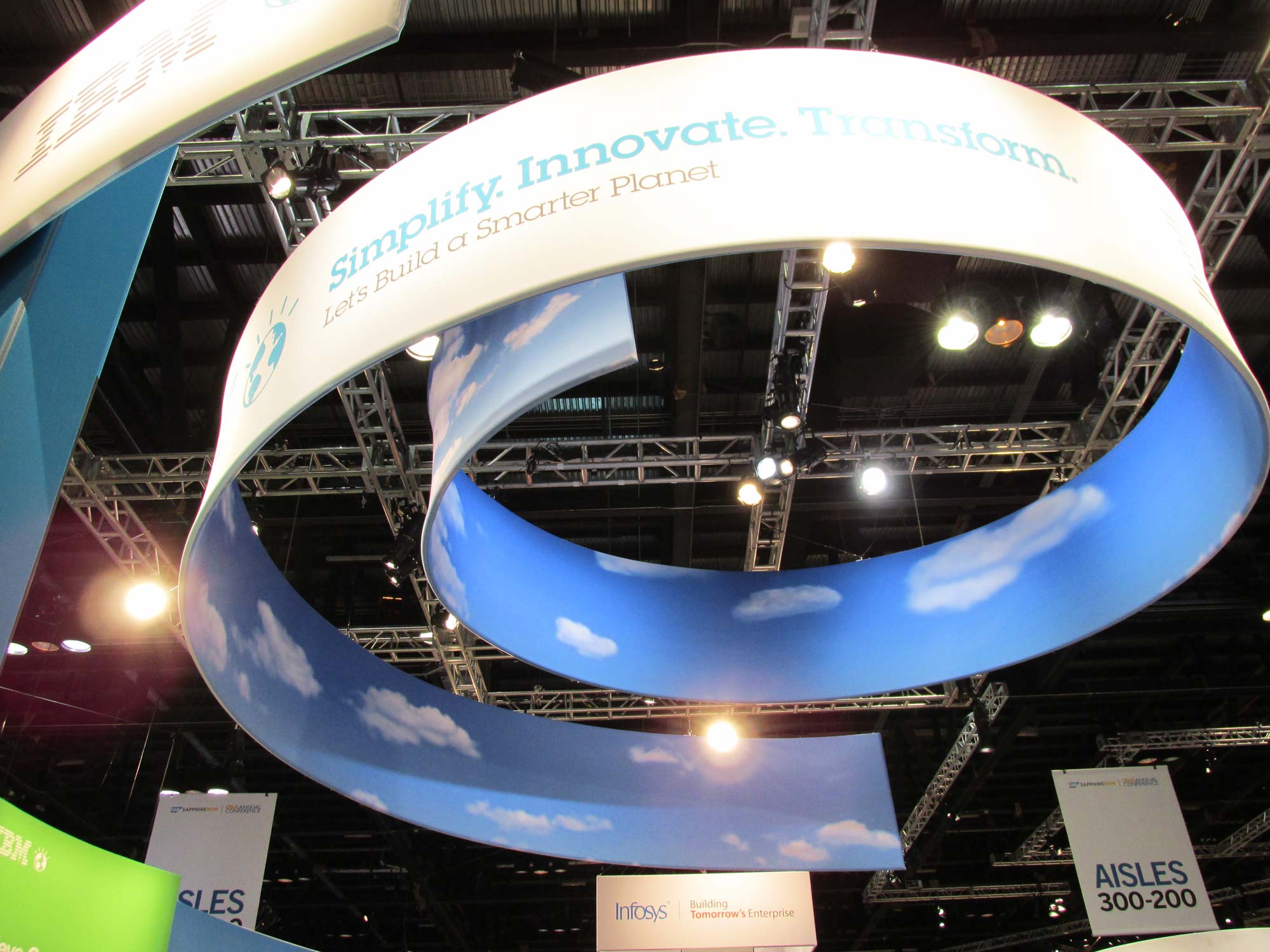
Curved light boxes can create sweeping illuminated surfaces, while custom fabricated lighting can be incorporated into rings, headers, arches, suspended elements, and dimensional architectural forms.
Planning the structure and lighting together helps create more consistent illumination while keeping wiring and mechanical components from interfering with the finished appearance.
Modular Fabrication for Large Curved Structures
One of the most important considerations in large scale custom fabrication is modularity.
A structure may look like one continuous form when installed, but manufacturing and shipping it as a single piece may be impractical or impossible.
Instead, large structures can be engineered as a series of smaller components.
Those sections can be:
- Manufactured and tested individually
- Connected to verify fit
- Disassembled for packing and shipping
- Reassembled at the final location
Well designed connection systems help the finished structure maintain the appearance of a continuous form while making transportation and installation more manageable.
This is particularly valuable for trade show environments, where structures frequently need to move between venues and be installed within limited timeframes.

Why Engineering Should Start Early
Custom curved structures are easiest to execute when manufacturing expertise enters the conversation early.
Waiting until a design is finalized to determine how it will be built can lead to compromises that might have been avoided through earlier collaboration.
Instead, designers and engineers can work together to evaluate questions such as:
- Can the desired radius be manufactured?
- Which structural system is best suited to the form?
- How should individual sections connect?
- What materials will create the desired finish?
- How will graphics follow the structure?
- Does the design incorporate lighting?
- How large can individual components be for shipping?
- How will the structure be assembled on site?
- Does it need to be reused?
Early collaboration doesn’t have to limit creativity.
In many cases, understanding manufacturing possibilities can actually expand it.

Combining Fabrication Methods
Some of the most interesting custom structures aren’t created with one manufacturing process at all.
A single project might incorporate bent tubing, curved extrusion, straight structural components, fabric graphics, rigid panels, acrylic, lighting, custom connectors, and fabricated details.
The appropriate combination depends on the design.
This is why thinking in terms of fabrication capabilities rather than individual products can be valuable when developing a custom environment.
Instead of asking, “Which existing display can create this?”
The better question may be, “What combination of materials and manufacturing methods will bring this idea to life?”
From Concept to Curved Structure
Curved fabrication gives designers a much larger vocabulary of shapes to work with.
Walls no longer have to be straight. Corners don’t have to meet at 90 degrees. Headers can sweep across an environment. Structures can arch overhead, wrap around spaces, form rings, or take on shapes developed specifically for a brand.
But successful curved structures require more than bending material.
They require the right combination of design, engineering, fabrication, graphics, finishing, logistics, and installation planning.
At Tectonics, our capabilities across tube processing, extrusion, engineering, printing, sewing, fabrication, lighting, and finishing allow us to evaluate each project individually and determine the right manufacturing approach for the design.
Explore What’s Possible with Curved Fabrication
Whether you’re designing a sweeping fabric wall, curved light box, architectural arch, suspended feature, or completely custom structure, the right fabrication approach starts with understanding what you want the finished environment to accomplish.
Contact Tectonics to discuss your next curved display or custom structure.