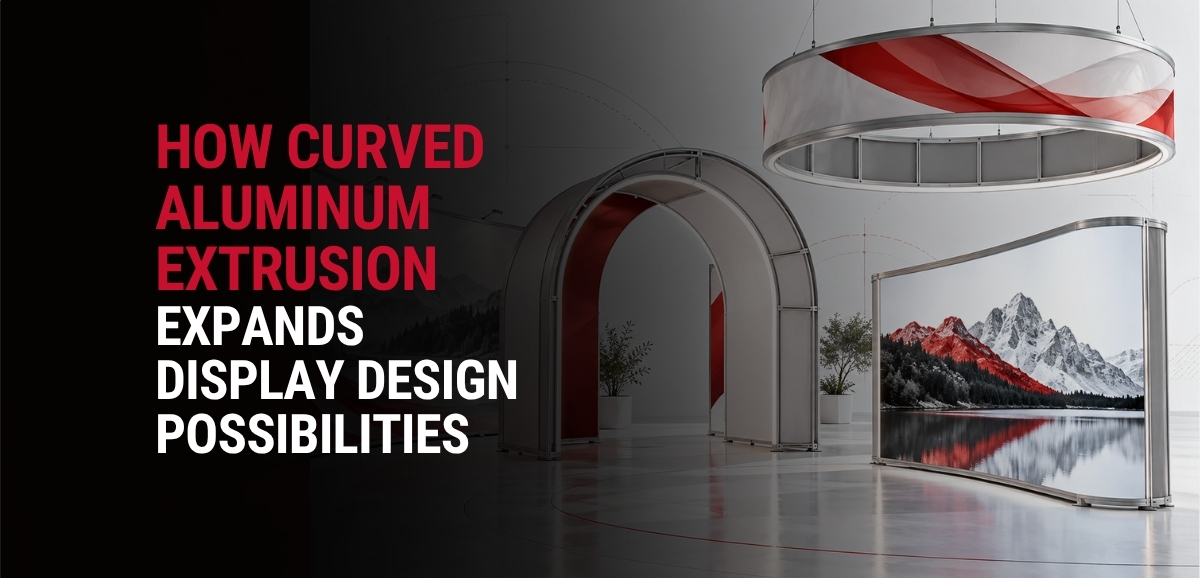
Straight aluminum extrusion has long been a practical building block for exhibits, displays, and branded environments. It is lightweight, modular, precise, and compatible with a wide range of graphics, lighting, and finishing systems.
But when that same material can be formed into controlled curves, the design possibilities change dramatically.
Curved aluminum extrusion gives designers another way to move beyond conventional rectangular structures and create walls, headers, light boxes, architectural features, and custom forms with more movement and visual interest.
The result is not simply a different shape. It is a broader design vocabulary.
Curves Can Change How a Space Feels
Straight lines naturally create order, structure, and definition. Curves can introduce something different. They can soften a transition between areas, guide visitors through a space, frame a focal point, create a sense of movement, or help a structure feel more organic.
In exhibit and experiential design, those qualities can be especially useful when the goal is to create an environment that feels less like a collection of walls and more like a cohesive branded space.
Curved extrusion can be used to create:
- Sweeping walls
- Rounded corners
- Arches and portals
- Curved headers
- Circular or oval forms
- Curved perimeter frames
- Light boxes
- Suspended structures
- Dimensional architectural features
- Custom branded forms
The value is not that every display should include a curve. It is that designers have another structural option when a curved form better supports the concept.
Curved Walls Can Create More Natural Transitions
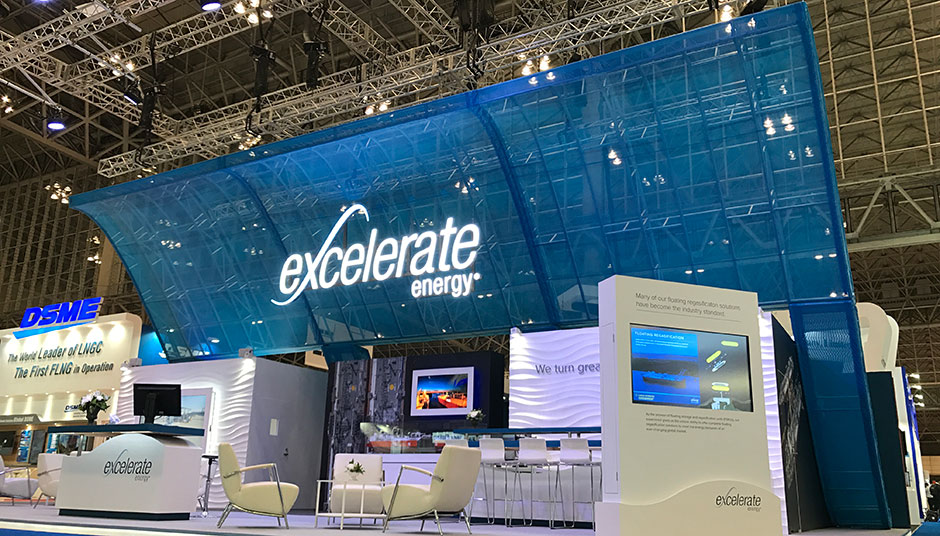
A flat wall creates a clear boundary. A curved wall can do something more subtle.
It can guide traffic around a corner, lead visitors toward an entrance, wrap around a product display, or help separate areas without creating an abrupt visual stop.
In larger exhibits and branded environments, this can make circulation feel more intentional. Instead of asking visitors to navigate around a series of right angles, curved structures can help create smoother transitions between zones.

That can be especially useful in spaces with:
- Multiple entry points
- Product demonstration areas
- Meeting spaces
- Hospitality zones
- Interactive installations
- Central focal points
The geometry of the structure becomes part of the visitor experience.
Curved Headers and Portals Can Create Stronger Visual Landmarks
Curved extrusion can also be used above eye level. Arched entries, rounded headers, and dimensional overhead features can help define a space before a visitor reaches it.
This can make an entrance feel more intentional and help create stronger sightlines across a busy show floor or environment.
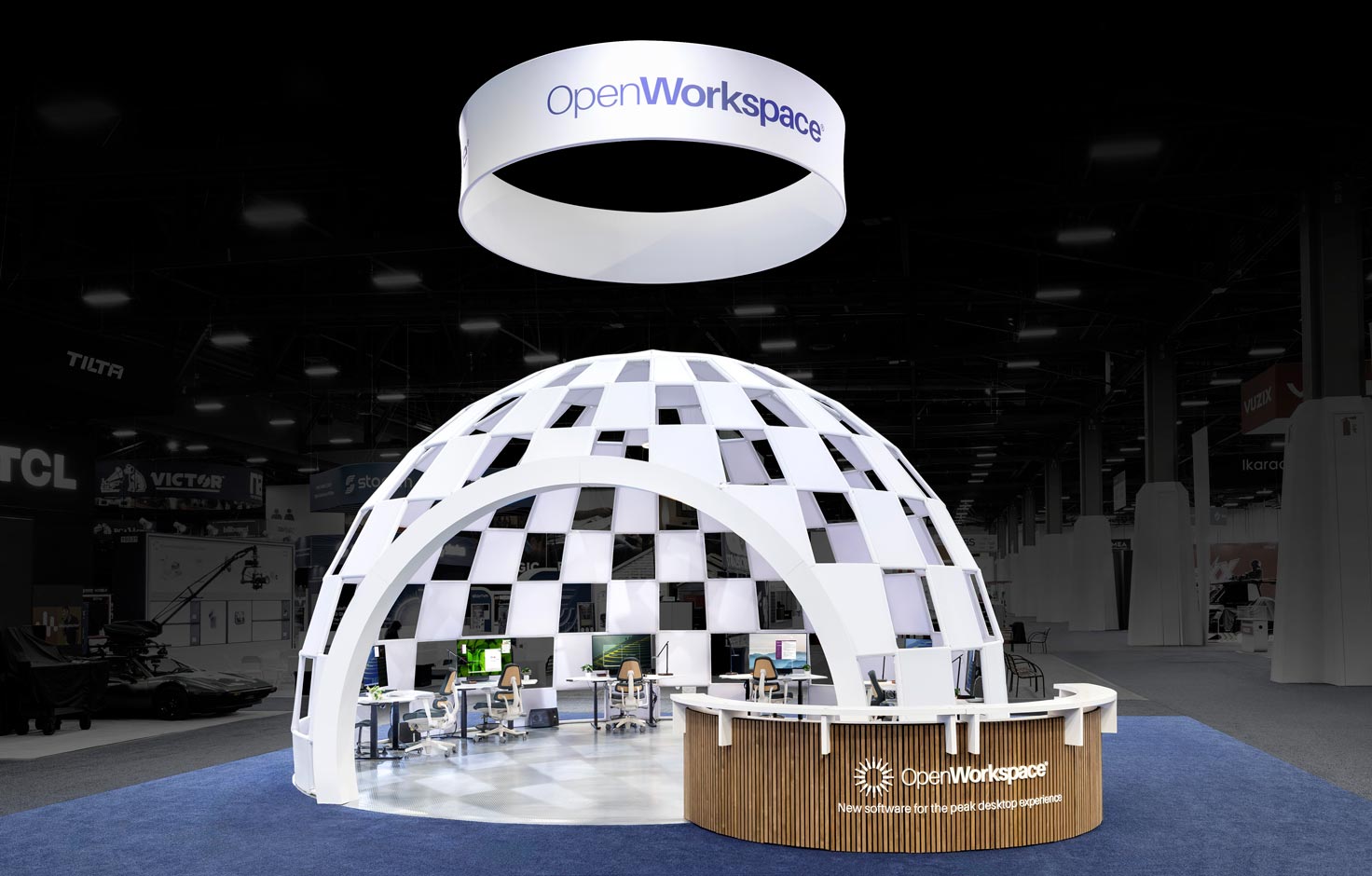
A curved header might be used to:
- Frame an entry
- Connect two structural elements
- Create a recognizable silhouette
- Support graphics or lighting
- Reinforce brand architecture
- Draw attention from multiple directions
Because these elements can often be integrated into a larger extrusion system, they can become part of the overall structure rather than an isolated decorative feature.
Curved Light Boxes Add Shape to Illumination
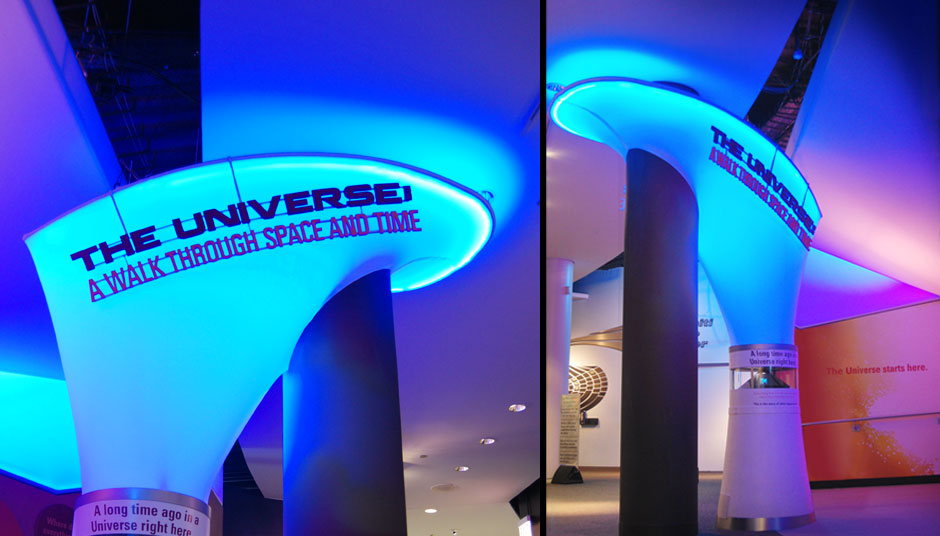
Light boxes do not have to be rectangular. Curved extrusion can make it possible to create illuminated structures that follow an arc, wrap around a space, or become part of a larger dimensional form. That opens up new ways to combine structure, graphics, and lighting.
For example, a curved light box can:
- Highlight a branded perimeter
- Create an illuminated arch
- Define a product zone
- Wrap around a central feature
- Add depth to a wall system
- Create a more sculptural visual element
The challenge is making sure the curve works with the lighting, graphic material, frame profile, and installation method.
The shape is only one part of the system.
Curved Extrusion Can Help Create More Cohesive Custom Structures
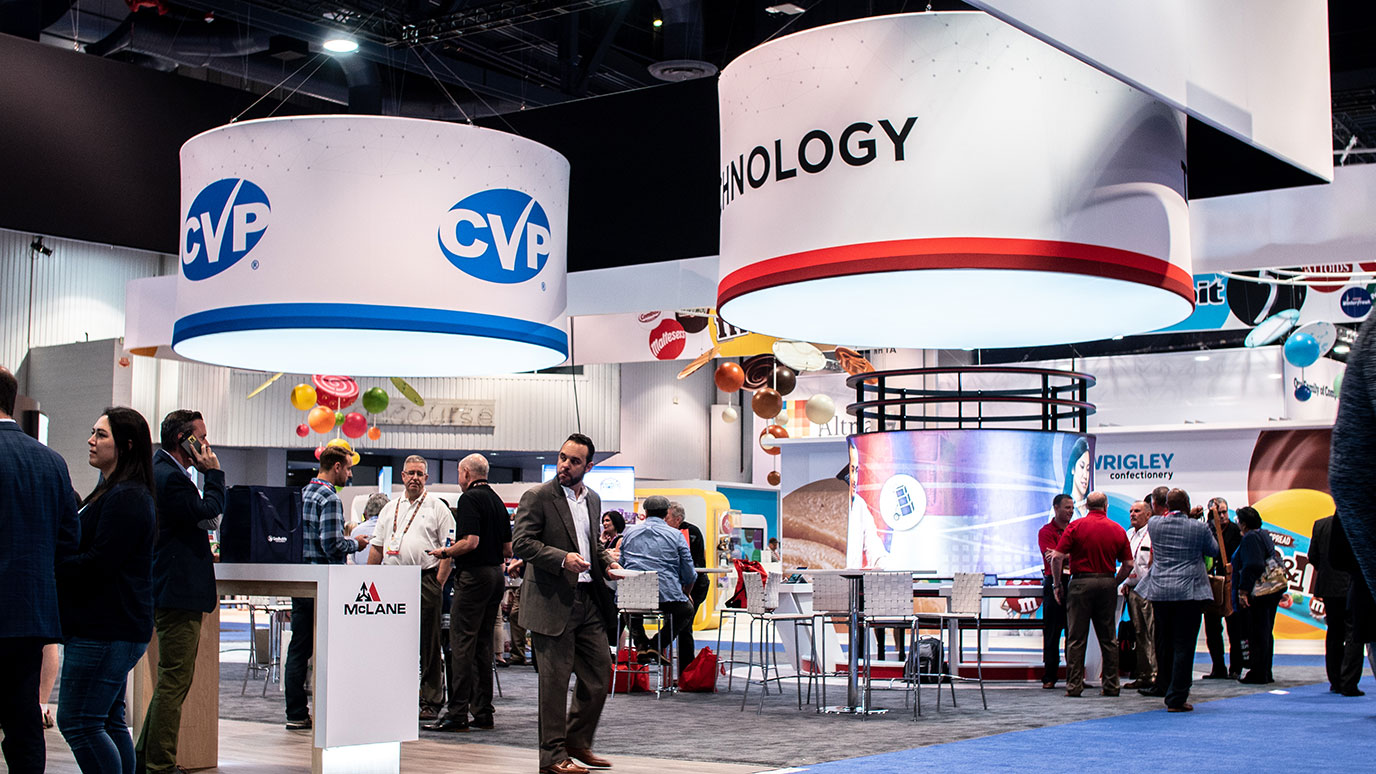
One of the biggest advantages of curved extrusion is how well it can integrate with straight structural components. A design does not have to be entirely curved. In many cases, the strongest solution combines both.
Straight sections can provide efficient structure and modularity, while curved sections introduce movement, softness, or emphasis where it matters most.
This makes it possible to create structures with:
- Curved ends and straight center sections
- Rounded corners within larger wall systems
- Arched openings between flat walls
- Curved headers over linear structures
- Circular features integrated into rectangular footprints
- Custom transitions between different structural geometries
This combination gives designers more control over where curves add value without adding unnecessary complexity everywhere else.
Graphics Need to Work With the Curve
Curved structures can create beautiful visual surfaces, but the graphics still have to perform. That means graphic planning needs to happen alongside structural planning.
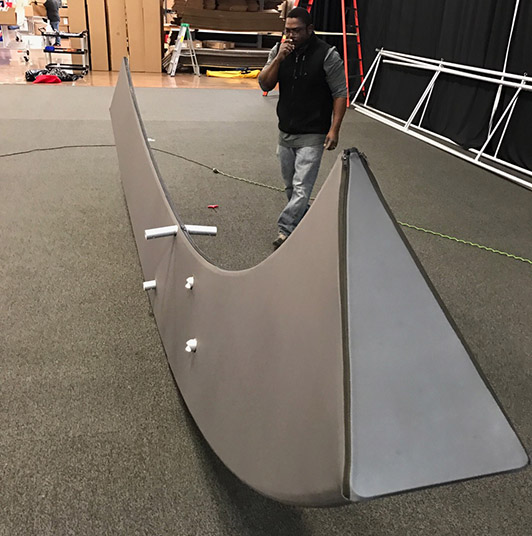
Depending on the application, curved extrusion may support tension fabric, printed panels, illuminated graphics, or other finishing systems. Each approach introduces its own considerations.
For tension fabric applications, designers may need to think about:
- Graphic tension
- Seam placement
- Fabric stretch
- Corner transitions
- Visual distortion
- Installation access
For rigid or panel based graphics, the curve may affect:
- Panel segmentation
- Attachment methods
- Surface continuity
- Alignment
- Shipping and handling
A successful curved display is not just a frame with a graphic added later. The structure and the graphic need to be designed to work together.
Lighting Adds Another Layer of Opportunity
Lighting can make curved forms even more dynamic. Integrated lighting can emphasize the shape of an arch, create a glowing perimeter, highlight a feature wall, or turn a curved structure into a stronger focal point.
But lighting introduces additional engineering considerations.
The design may need to account for:
- LED placement
- Diffusion
- Power routing
- Access for service
- Heat management
- Graphic translucency
- Internal clearances
- Assembly sequence
This is another reason curved structures benefit from early collaboration between designers, engineers, and fabricators. The earlier those systems are coordinated, the easier it is to preserve the intended visual effect.
Curved Extrusion Can Support Modular Design
Curves do not automatically mean one time custom fabrication. Depending on the design, curved extrusion can become part of a modular system that can be reused, reconfigured, or combined with straight components for future installations.
That can be especially valuable for brands that participate in multiple events or use similar structures across different spaces. A curved header might be reused with a new wall layout. A rounded corner section might become part of a smaller footprint. A curved light box might move from an exhibit to a showroom or branded environment.
Planning for reuse can influence decisions about:
- Section lengths
- Connection points
- Graphic replacement
- Packing
- Storage
- Installation
- Future configurations
The goal is not simply to create a curved structure. It is to create one that continues to make sense throughout its entire life cycle.
Manufacturing Considerations Still Matter
Curved extrusion expands design possibilities, but not every profile or radius behaves the same way. Several factors can affect whether a concept is practical to manufacture.
These may include:
- Extrusion profile
- Bend radius
- Structural requirements
- Wall thickness
- Profile geometry
- Connection locations
- Graphic integration
- Lighting requirements
- Overall dimensions
- Shipping constraints
- Installation access
The tighter or more complex the geometry becomes, the more important it is to evaluate manufacturability early. A concept that looks simple in a rendering can involve significant structural and fabrication decisions behind the scenes.
Early Collaboration Creates More Options
One of the best ways to take advantage of curved extrusion is to involve the manufacturer before the design is fully locked.
That gives the team more flexibility to evaluate:
- Which profiles make sense
- What radiuses are achievable
- Where curved and straight sections should meet
- How the structure should divide for shipping
- How graphics should attach
- Where lighting should be integrated
- How the system will install
- Whether components can be reused
Early collaboration does not mean compromising the creative concept. It often means finding a smarter way to achieve it.
Curved Extrusion Is One Tool Within a Larger Fabrication System
Curved aluminum extrusion can open up exciting design possibilities, but it is rarely the only fabrication method involved in a custom structure.
A project may also include straight extrusion, bent tubing, fabricated aluminum components, tension fabric, printed graphics, lighting, custom sewing, hardware, and other finishing methods.
The right solution depends on the design. At Tectonics, curved extrusion is part of a broader set of engineering and manufacturing capabilities that can be combined based on the needs of the project.
That gives designers more freedom to focus on the experience they want to create while working with a fabrication partner who can help determine how to build it.
Bring More Shape Into Your Next Project
Curves can guide movement, soften architecture, create stronger focal points, and help custom environments feel more distinctive.
If you are exploring curved walls, arches, headers, light boxes, or custom dimensional structures, Tectonics can help evaluate the geometry, materials, graphics, lighting, fabrication, shipping, and installation requirements early in the process.
Have a curved concept in mind? Talk with Tectonics about the best way to bring it to life.