Tradeshows have always been about one thing, connection. But the way brands show up on the floor has evolved dramatically over the years. What started as simple pop-up booths and rigid panel walls has transformed into an arena for design, technology, and storytelling innovation.
Today, tradeshow displays do more than occupy space. They express identity, embody sustainability, and adapt seamlessly to evolving marketing goals.
From Panels to Portability
In the 1980s and 1990s, tradeshow displays were primarily rigid structures made from wood, laminate, or heavy metal frames. They were durable, but not exactly nimble. Setup required a small crew, a long timeline, and a big shipping crate.
As tradeshows became more competitive, and budgets needed to stretch further, brands began seeking displays that were lighter, faster to assemble, and easier to reconfigure.
Enter the pop-up display. These collapsible systems revolutionized portability, allowing teams to build a branded environment in minutes instead of hours. For the first time, modularity and mobility were top priorities.
The Rise of Fabric and Frame Systems
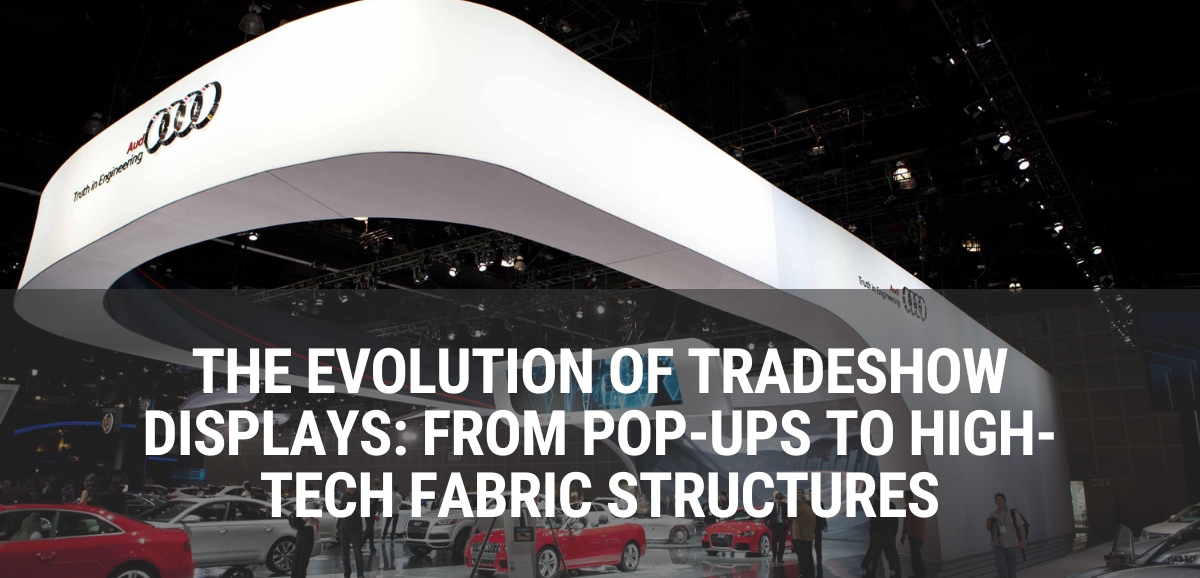
The early 2000s brought another leap forward with tension fabric displays. By combining lightweight aluminum extrusions with printed stretch fabric graphics, brands achieved seamless visuals and easy assembly, all while reducing shipping costs and setup time.
This shift didn’t just change how displays looked, it redefined what was possible. Fabric became the medium for bold color, precision branding, and even illumination. These systems could scale from a 10×10 booth to a double-decker environment without losing aesthetic consistency.
At Tectonics, we helped push this transformation forward by engineering modular, sustainable, and highly customizable tradeshow displays that bring design and performance together.
Sustainability and Smart Engineering Take Center Stage
As brands prioritize environmental responsibility, today’s displays emphasize reusability, recyclability, and reduced waste. Modern extrusion systems are built for repeated reconfiguration. One frame, countless layout possibilities. Dye-sublimated fabric graphics can be refreshed seasonally without rebuilding an entire booth.
Technology has joined the mix as well. From integrated lighting systems to digital displays and immersive environments, the latest generation of tradeshow architecture is as smart as it is striking.
What’s Next? Adaptive, Data-Driven Design
The next wave of tradeshow innovation is already underway, driven by automation, parametric design, and data insights. Imagine booths that adapt in real time based on attendee interaction, or modular systems that can be re-engineered digitally before fabrication even begins.
At Tectonics, we’re building that future through advanced manufacturing, proprietary software, and a commitment to continuous innovation.
In short: Tradeshow displays have evolved from static backdrops to dynamic brand experiences. And for companies that want to stay ahead, the next evolution is already here. Flexible, sustainable, and beautifully engineered.